Source 1 #
The term ‘designer amphetamine’ is often used to describe synthetic chemicals that are derived from amphetamine or methamphetamine. Designer amphetamines, like other designer drugs, are often created to avoid regulation by existing drug laws.
MDMA (methylenedioxymethamphetamine, commonly known as ecstasy) is the most well-known designer amphetamine. Other examples include, but are not limited to, MDEA (commonly known as ‘Eve’), MDA, 2-CB, and 25-I.
Reference: [ACMT Designer Amphetamines]
Source 2 #
Two stimulants: amphetamine and methamphetamine
Designer amphetamines: 3,4-methylenedioxymethamphetamine (MDMA; Ecstasy), 3,4-methylenedioxyamphetamine (MDA), and 3-4-methylenedioxyethylamphetamine (MDEA)
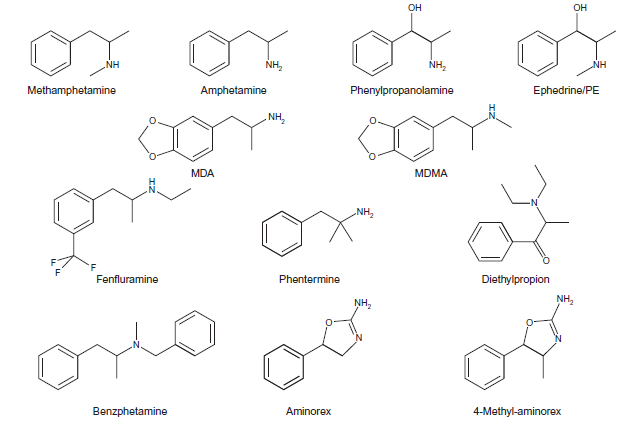
Other sympathomimetic amines (see Fig. 16.1) with similar structures include compounds such as ephedrine and pseudoephedrine.
Additional designer amphetamines are: methiopropamine, 4-fluoroamphetamine, 4-fluoromethamphetamine, 4-methylamphetamine, and cathinones.