series: [Analysis of Pesticides in Food and Environmental Samples, edited by Jose L. Tadeo]
Herbicides #
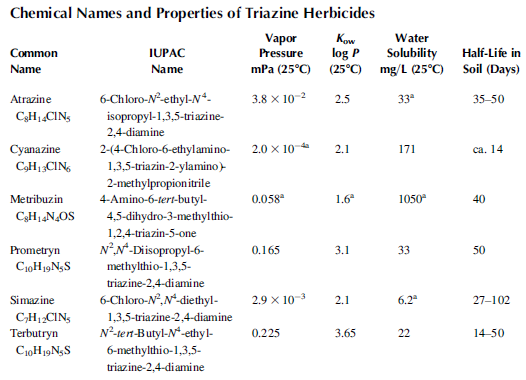
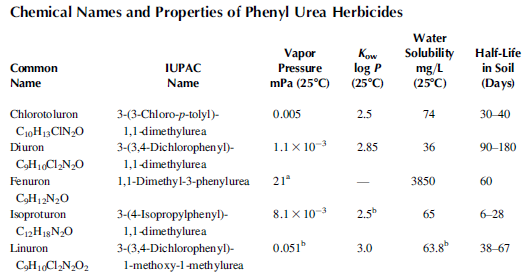
A knowledge of physicochemical properties, that is, vapor pressure (V.p.), octanol/water partition coefficient (Kow, expressed in the logarithmic form log P), and solubility in water allows the fate and behavior of such chemicals in the environment to be predicted.
Amides #
A large variety of compounds form this group of herbicides, which have the following general formula: R1–CO–N–(R2,R3).
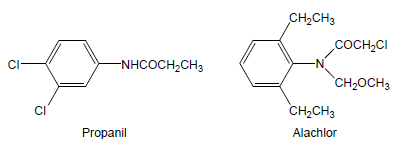 The key components of this group are the N-substituted chloroacetamides and the substituted anilides. These herbicides are normally absorbed by shoots and roots and they are, in general, nonpersistent compounds in soil.
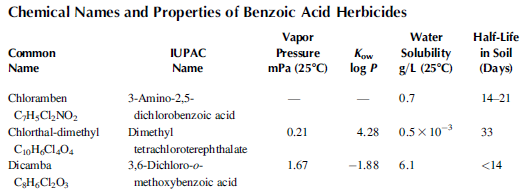
Benzoic Acids #
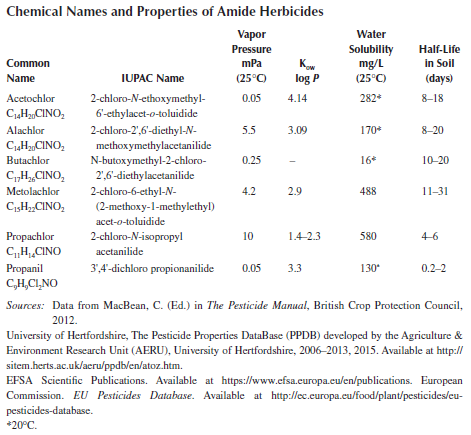
This group is mainly formed by chlorinated derivatives of substituted benzoic acids.
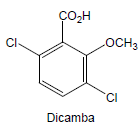 These compounds are especially used to control deep-rooted perennial weeds and applied as salts or esters.
Carbamates #
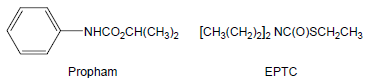
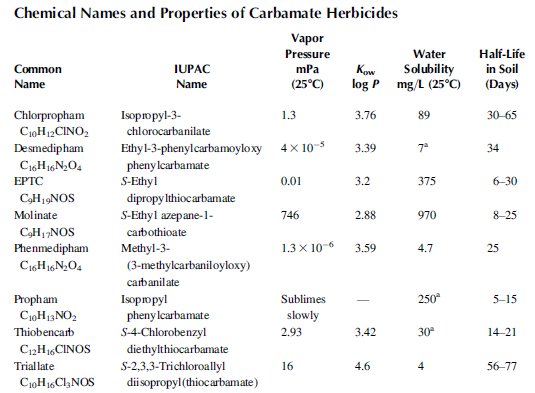
Carbamates are esters of the carbamic acid (R1–O–CO–NR2R3) and together with thiocarbamates (R1–S–CO–NR2R3) represent a broad group of herbicides.
Nitriles #
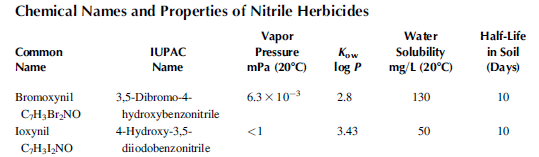
Bromoxynil and ioxynil are the hydroxybenzonitriles used as herbicides.
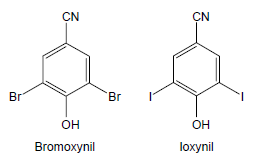 They are formulated as salts or octanoate esters and foliage applied to control broadleaved weeds in cereals and horticultural crops.
Nitroanilines #
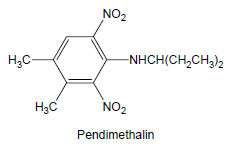
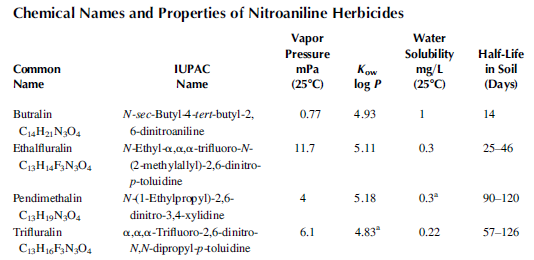
These compounds are derivatives of 2,6-dinitroaniline.
Organophoshorus #
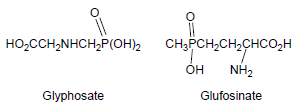
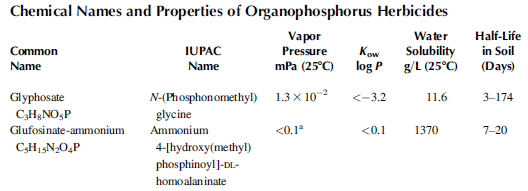
Glyphosate and glufosinate are broad spectrum, nonselective, postemergence contact
herbicides active only for foliar application. Aminomethylphosphonic acid (AMPA) is the major degradation product of glyphosate.
Phenoxy Acids #
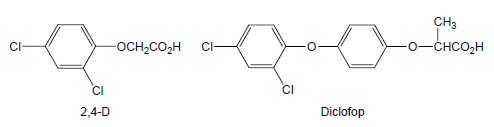
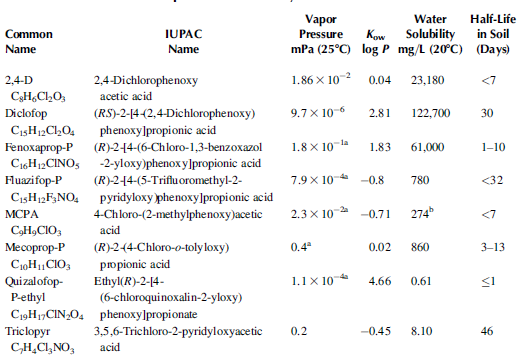
Phenoxy acids are a common name given to a group of compounds formed by a phenoxy radical linked to a low carbon number alkanoic acid, such as 2,4-dichlorophenoxyacetic acid (2,4-D, acetic acid) or mecoprop (propionic acid). Some herbicides of this group are formed by stereoisomers, which are commercialized as single enanthiomers or racemic mixtures.
Pyridines and Quaternary Ammonium Compounds #
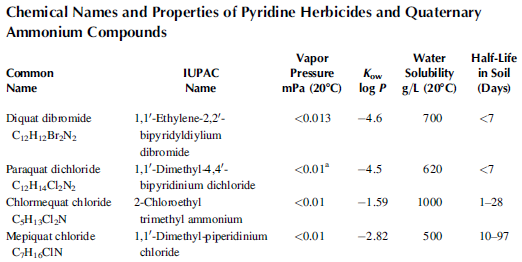
The herbicide group of pyridines, also named bipyridylium, is formed by paraquat
and diquat.
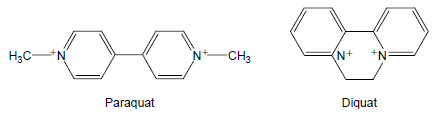 These compounds are very strong bases because of their quaternary ammonium structures
and are rapidly adsorbed and inactivated in soil.
These compounds are very strong bases because of their quaternary ammonium structures
and are rapidly adsorbed and inactivated in soil.
Pyridazines and Pyridazinones #
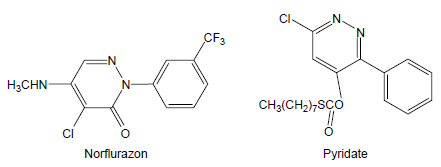
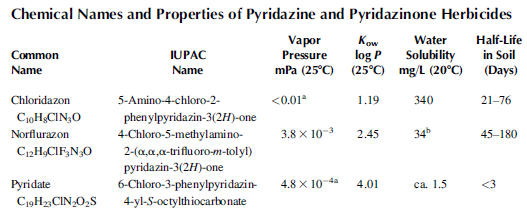
Pyridate and pyridazinones, like norflurazon and chloridazon, are included in this
group.
Triazines #
Ureas #
Phenylureas #
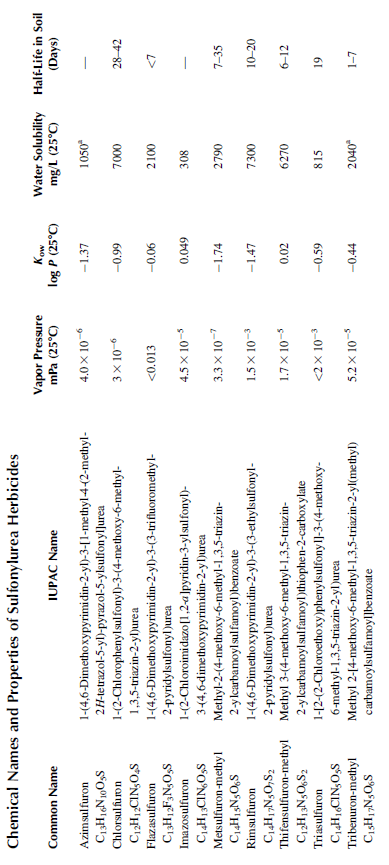
Sulfonlyureas #
Insecticides #
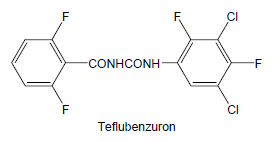
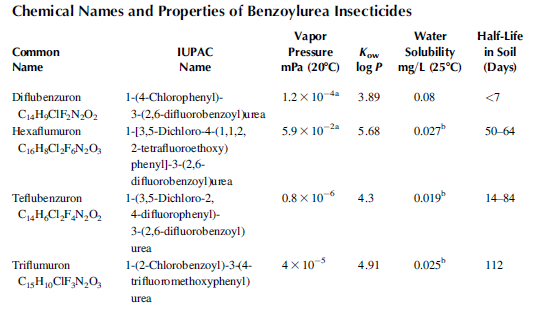
Benzoylureas #
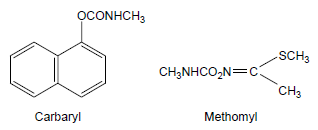
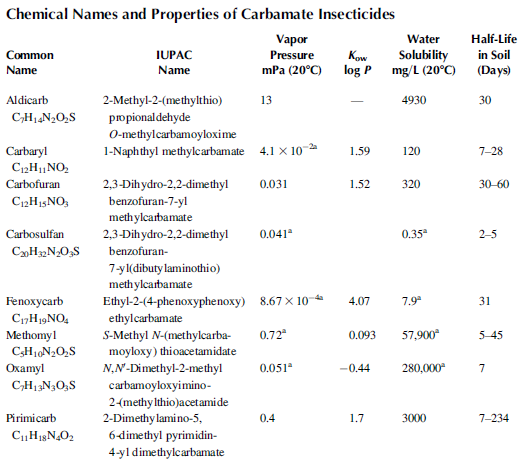
Carbamates #
Organochlorines #
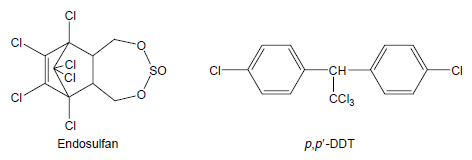
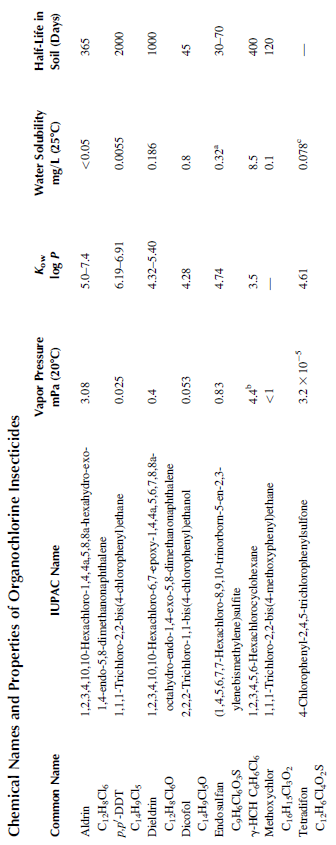
These insecticides are characterized by three kinds of chemicals: DDT analogs, benzene
hexachloride (BHC) isomers, and cyclodiene compounds.
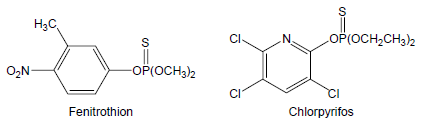
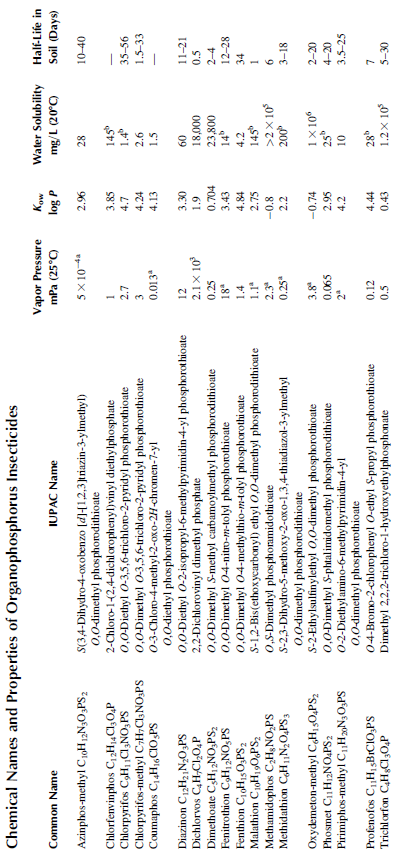
Organophosphorus #
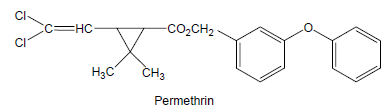
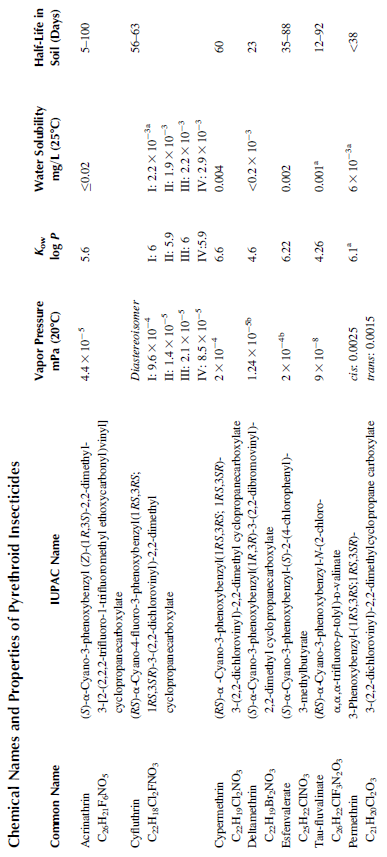
Pyrethroids #
Fungicides #
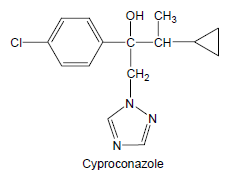
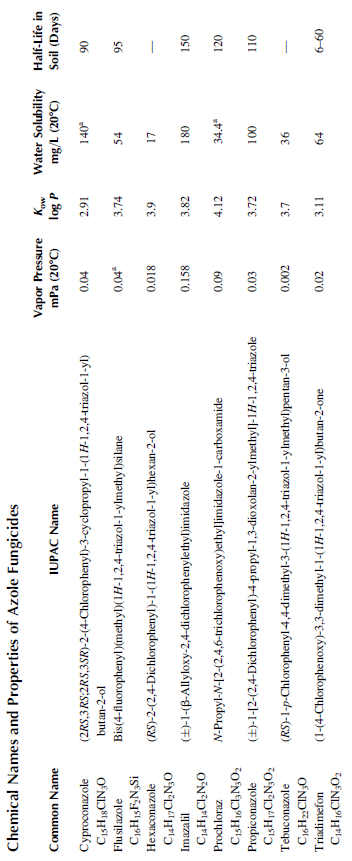
Azoles #
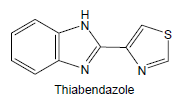
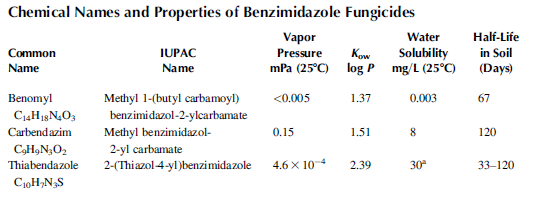
Benzimidazoles #
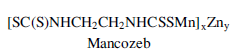
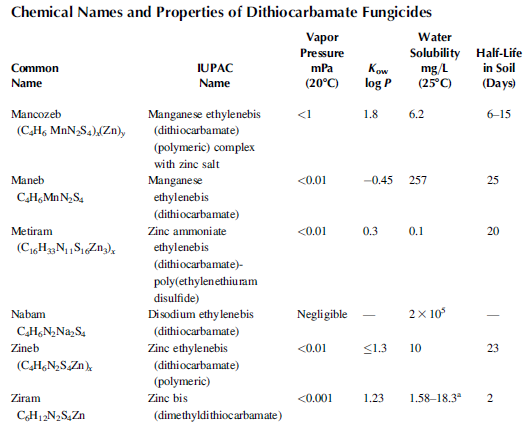
Dithiocarbamates #
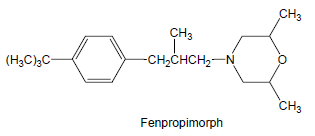
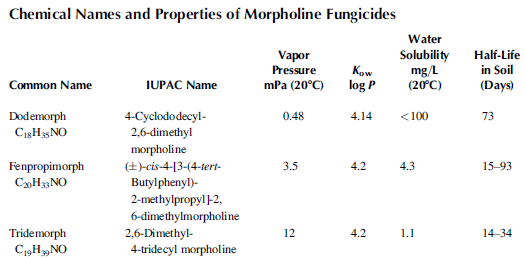
Morpholines #
Miscellaneous #