Section 9: Highly Fractionated Designs
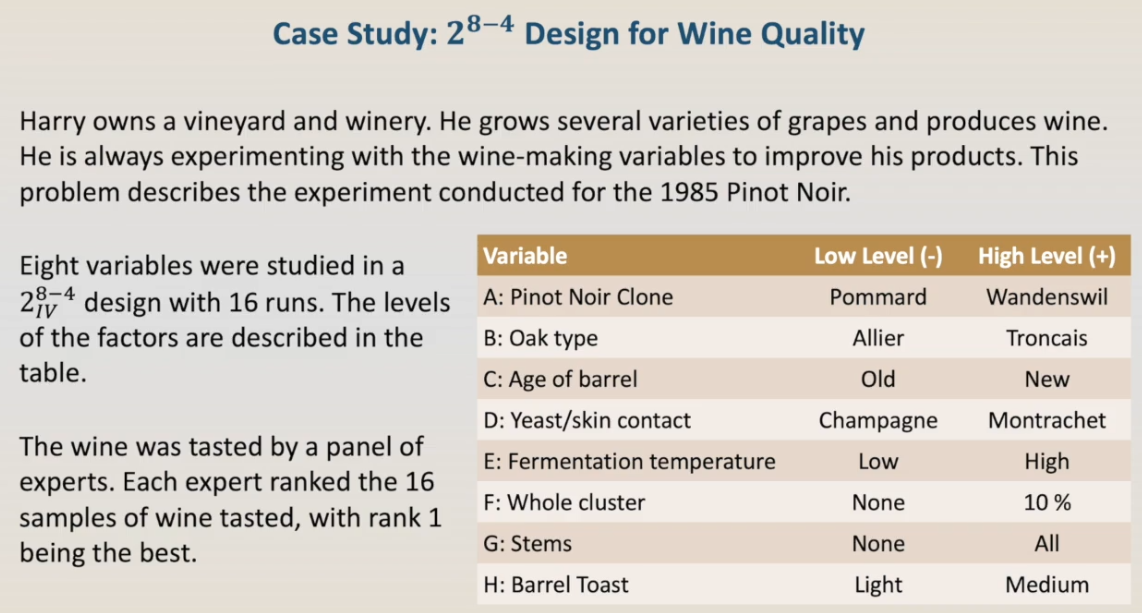
Eight variables were studied in a 2IV8-4 fractional design with 16 runs. The levels of the factors are described in the table:
Factor A, the pinot noir clone – Pommard or Wandenswil.
Factor B is the oak type - allier or troncais.
Factor C is the age of the barrel - old or new.
Factor D is the yeast/skin contact - Champagne or Montrachet.
Factor E, the fermentation temperature - low or high.
Factor F, the presence of the whole cluster - none or 10 %.
Factor G, the presence of stems – none or all.
And finally, factor H, the barrel toast - light or medium.
The wine was tasted by a panel of experts. Each expert ranked the 16 samples of wine tasted, with rank one being the best.
Please download and open the R code and the data files and let's jump to R to analyse this problem.