Section 8: Fractional Designs
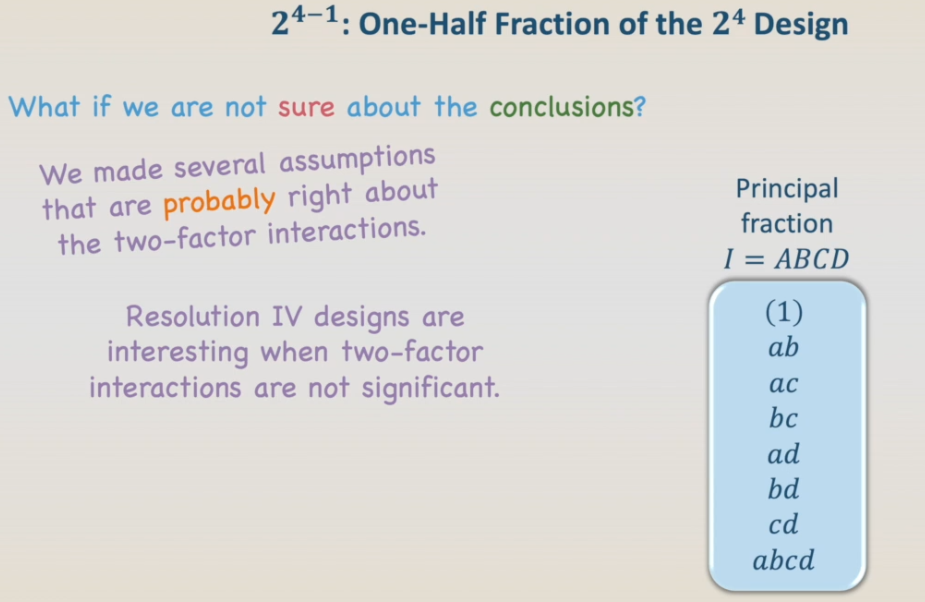
And what if we are not sure about the conclusions? After all, we have made several assumptions that are probably right about the two-factor interactions. Resolution IV designs are interesting and conclusive when two-factor interactions are not significant, but this was not the case. In this example, we’ve run the principal fraction of the design,
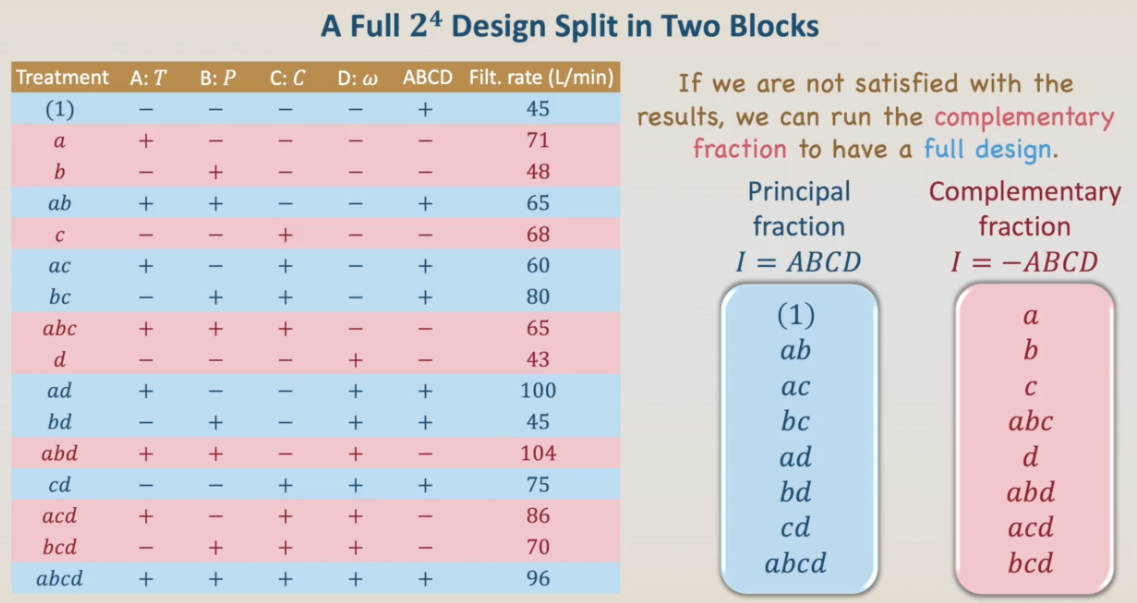
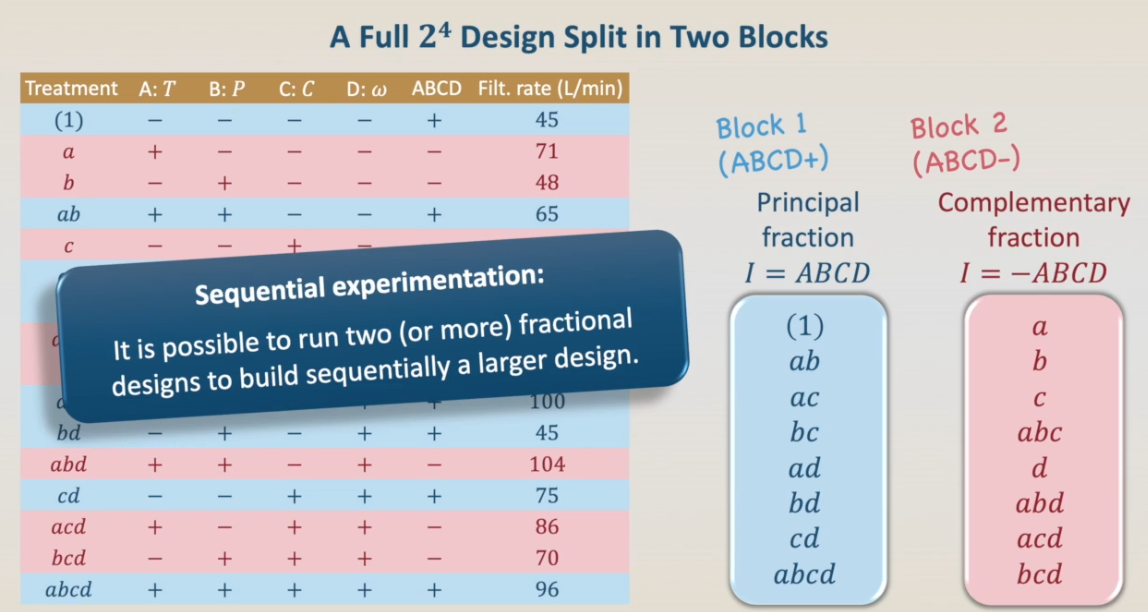
the treatments with the plus sign in the ABCD column. However, If we are not satisfied with the results, we can run the complementary fraction to have a full design. The complementary fraction, with I=-ABCD, are the treatments with a minus sign in the ABCD column. Now we have a full two in the power of four design,
split into two blocks: each fraction is a block. This is the idea of sequential experimentation we’ve talked earlier: It is possible to run two or more fractional designs to build sequentially a larger design.