Thermo Guide #
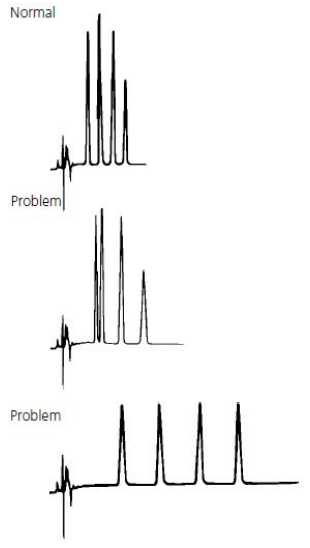
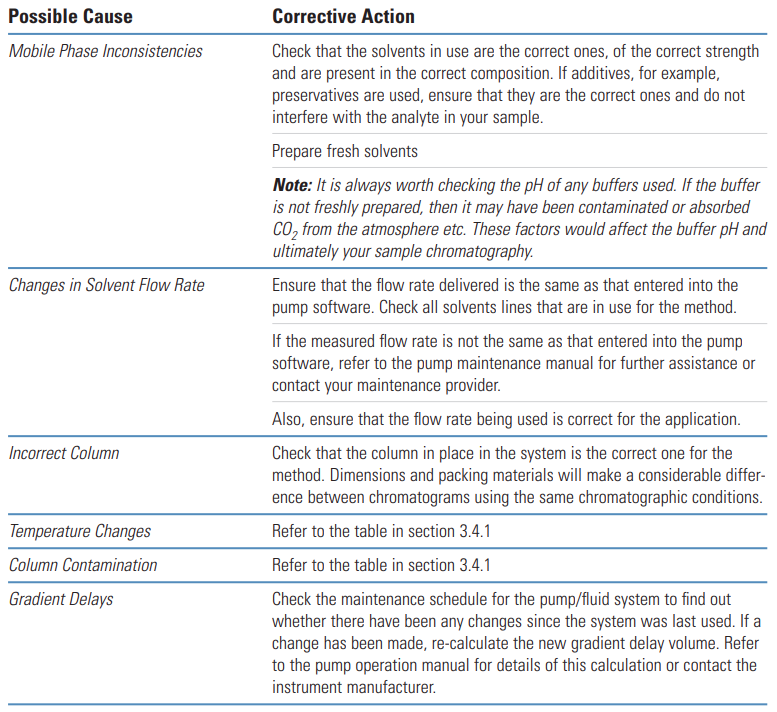
Retention Time Changes from Injection to Injection #
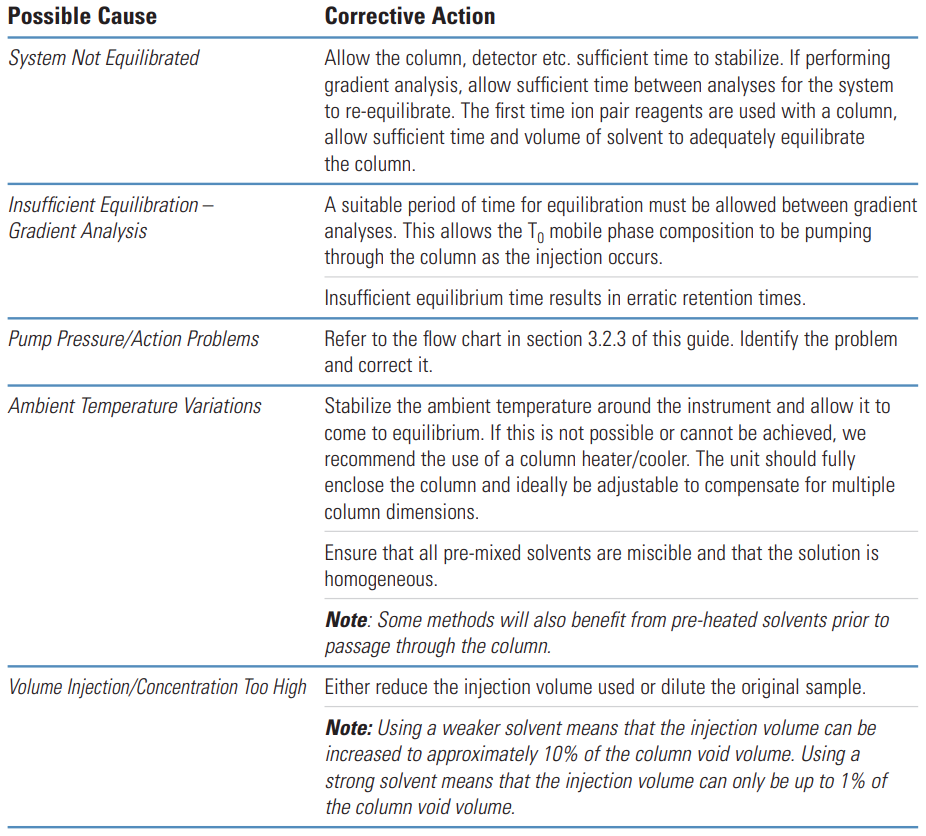
The most common cause of peak retention time drift is an un-equilibrated system. The detector and fluid system must be stable prior to starting an analysis.
Temperature changes during the analysis are another major cause of peak drift. If your analytical column is subject to fluctuations in temperature, then we recommend that the column is housed in a thermally controlled environment, such as a column oven/jacket etc.
Finally, where possible, we recommend the pre-mixing of all solvents used in isocratic methods.
Continually Increasing or Decreasing Retention Times #
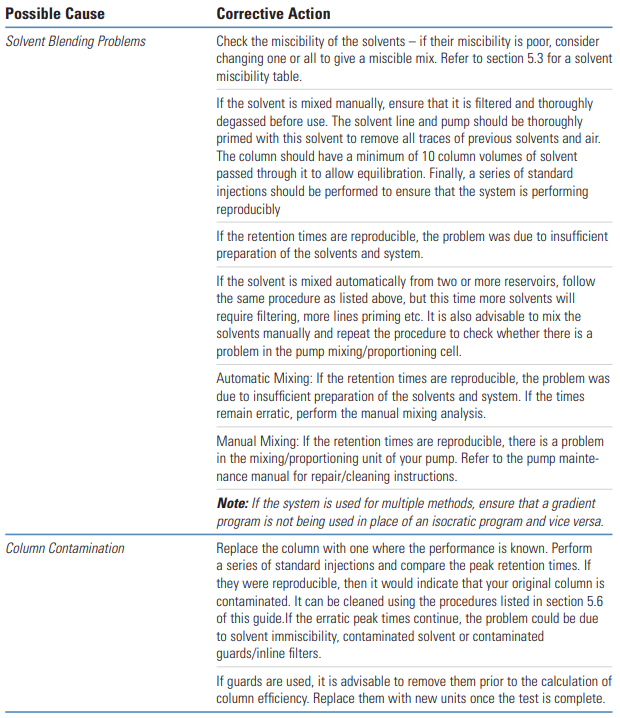
The most common cause of peak retention time drift in one direction is poorly prepared or mixed solvents or a system leak.
If you are confident that the solvents were prepared correctly, then it is very important that you determine whether they are being mixed correctly (mixing cell problems). Where solvents are mixed manually prior to pumping, ensure that the solvent flow rate is correct and constant.
Increasing/Decreasing to a New Constant Retention Time #
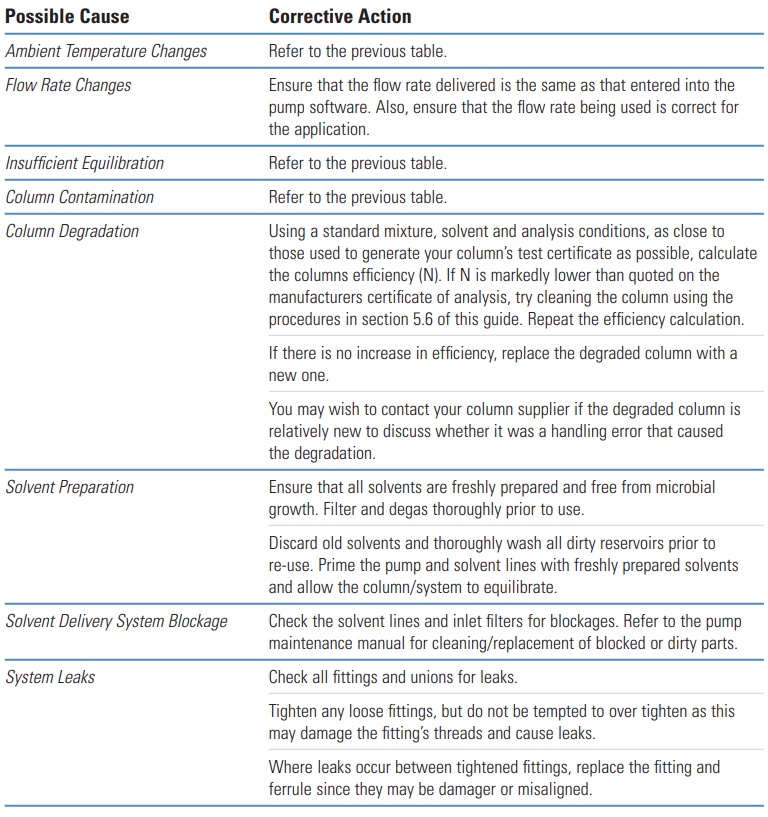
The most common cause of new constant value direction is poorly prepared or mixed solvents.
If you are confident hat the solvents were prepared correctly, then it is very important that you determine whether they are being mixed correctly (mixing cell problems).
Where solvents are mixed manually prior to pumping, ensure that the solvent flow rate is correct and constant.
The last most common cause of retention time change is a leak in the system or build up of contaminants.
Sigma-Aldrich Guide #
Problem | Probable Cause | Remedy/Comments |
|---|---|---|
|
1. Leak. |
1. Check system for loose fittings. Check pump for leaks, salt buildup, unusual noises. Change pump seals if necessary. |