Elementary Knowledge of Peak Shape #
How is peak shape measured? #
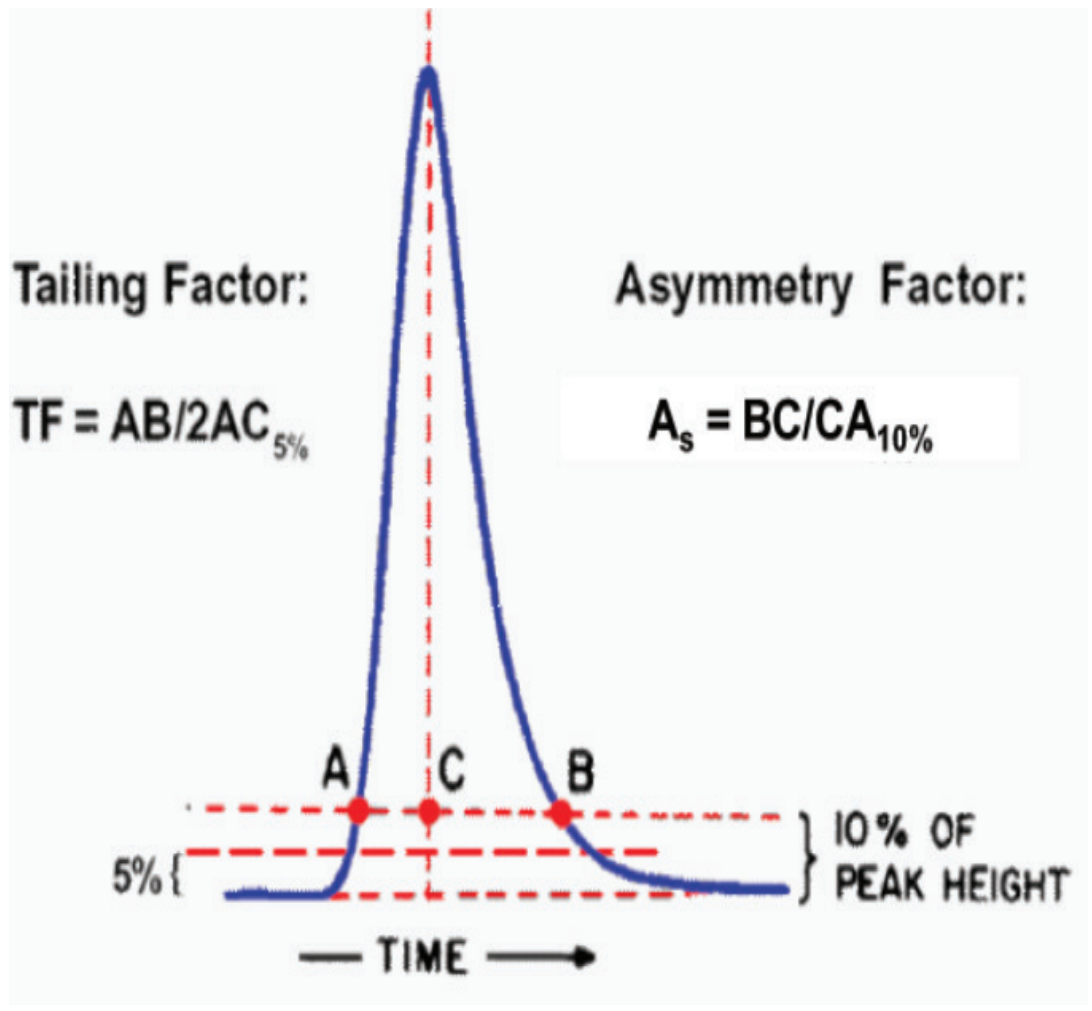
The tailing factor is determined by drawing a perpendicular line from the peak centre to the baseline of the peak. Then the peak width and the front half-width are measured for the peak at 5% of the height of the peak. The tailing factor is simply the entire peak width divided by twice the front half-width.
The non-pharmaceutical world tends to use the asymmetry factor instead of the tailing factor to measure peak tailing. The asymmetry factor is based on the front and back half-widths of the peak, but these are measured at 10% of the peak height. The asymmetry factor is determined by dividing the back half-width by the front half-width.
Problems with Peak Shape #
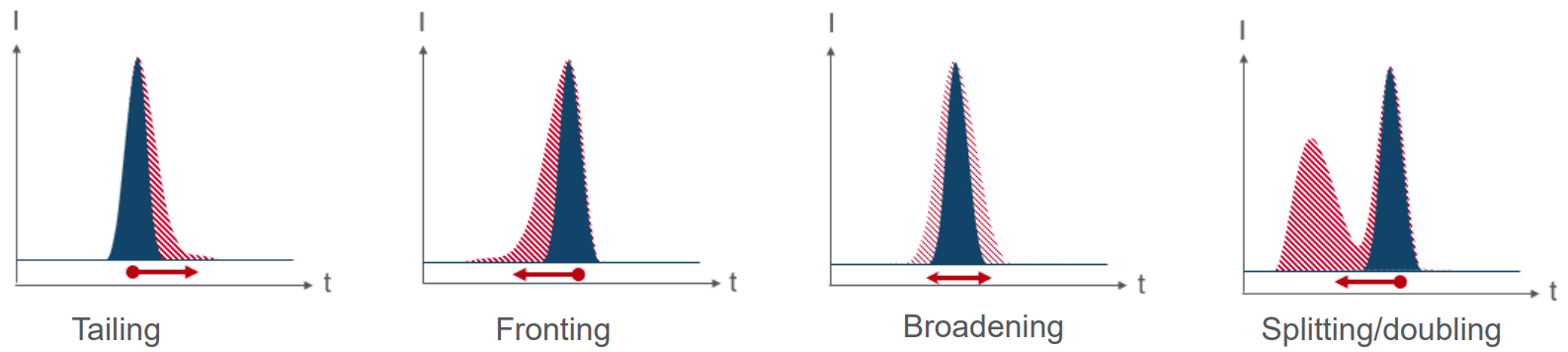
Factors affecting peak shape. #
-
Column
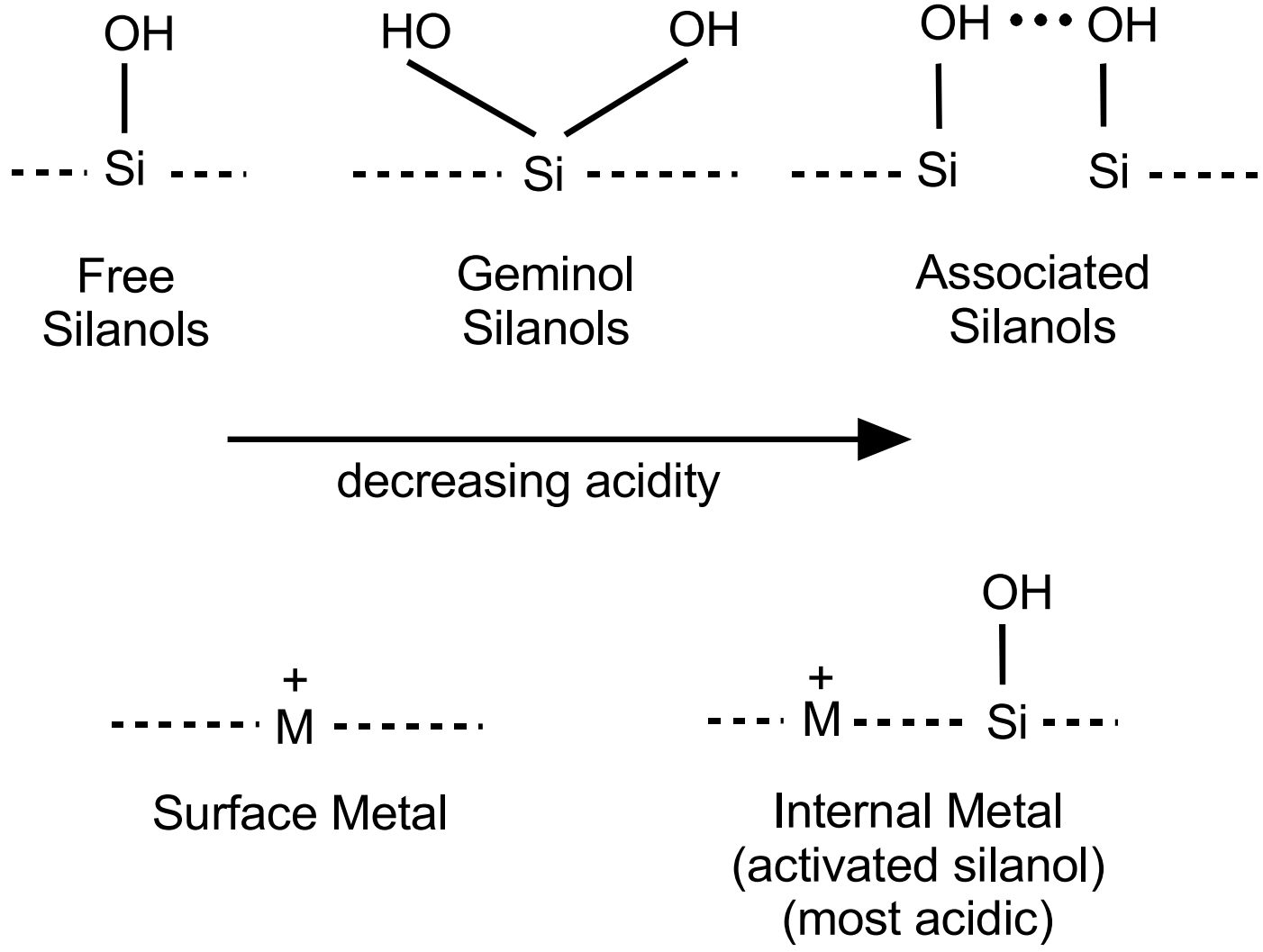
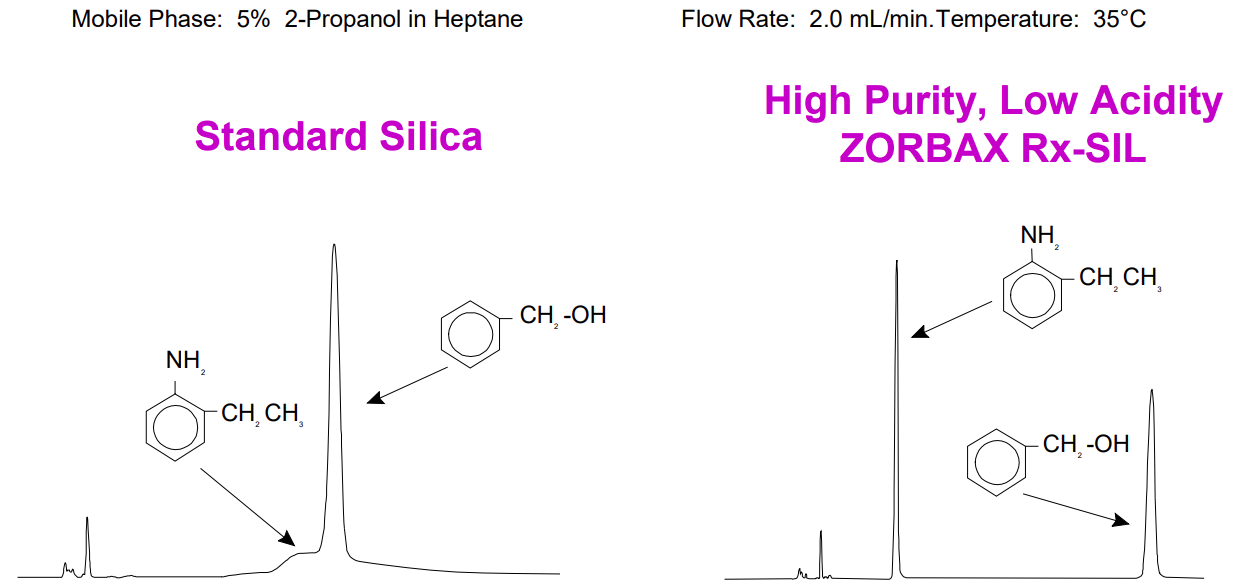
- Silica type/acidity/metal content
- Fully hydroxylated silica and silica metal content
- Silica silanol ionization
- Hydrogen bonding with silica silanols
- column bonding
- End capping
- Type of bonded phase
- Column packing
- Pore size/particle size/particle morphology
- Formation of voids in the packed bed
- Silica type/acidity/metal content
-
Mobile Phase
- pH
- Buffers
- Temperature
- Organic modifiers
- Mobile phase additives (TEA, TFA, etc.)
-
Connecting capillaries and fittings
-
System
-
Sample
Column: Silica Type/ Acidity/ Metal Content #
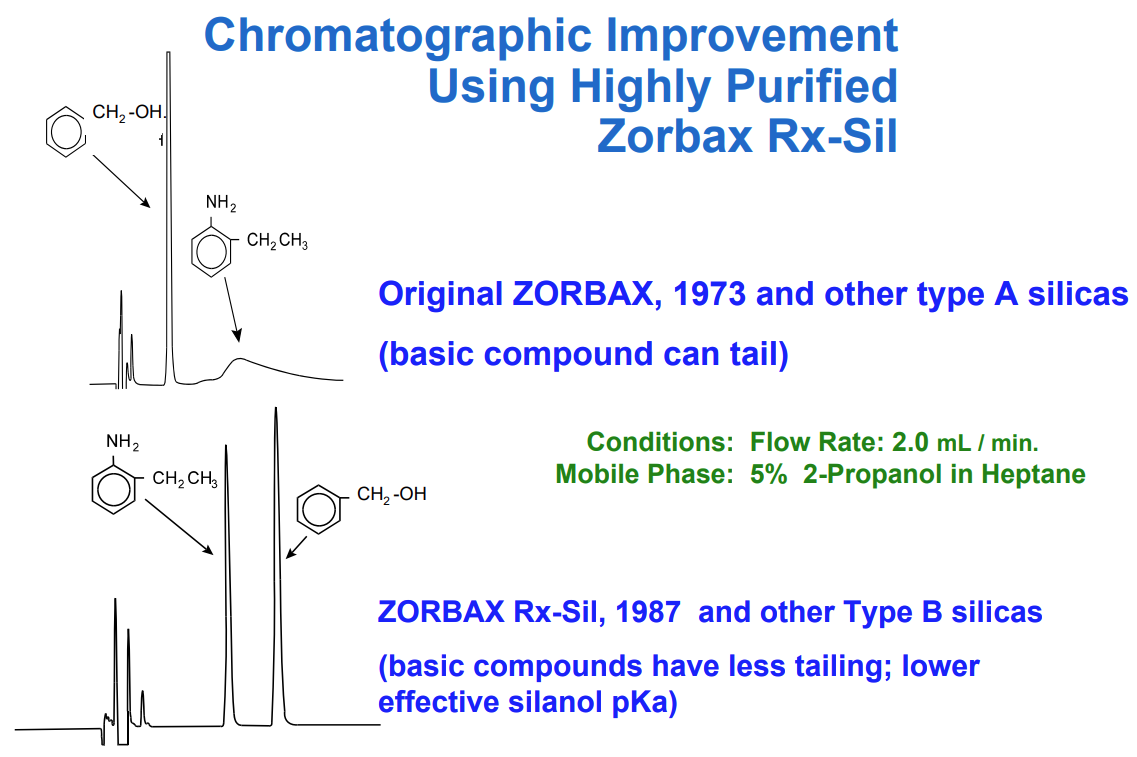
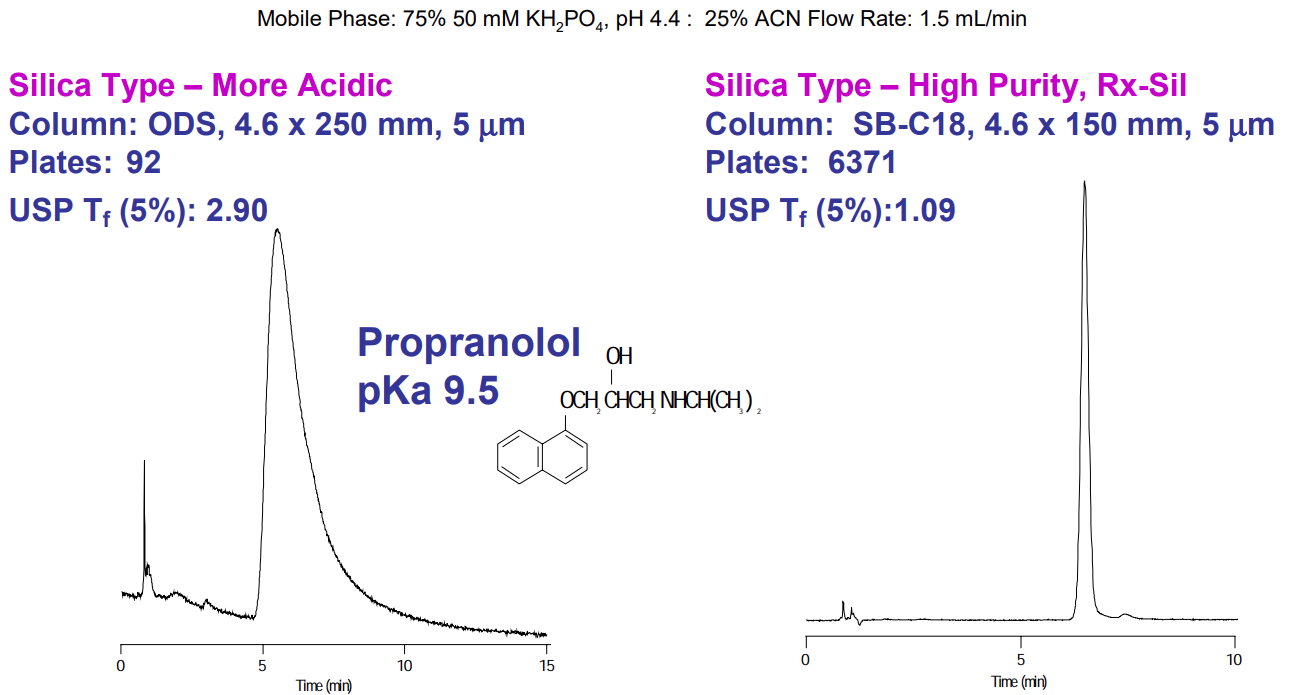
Column: Silica silanol ionization #
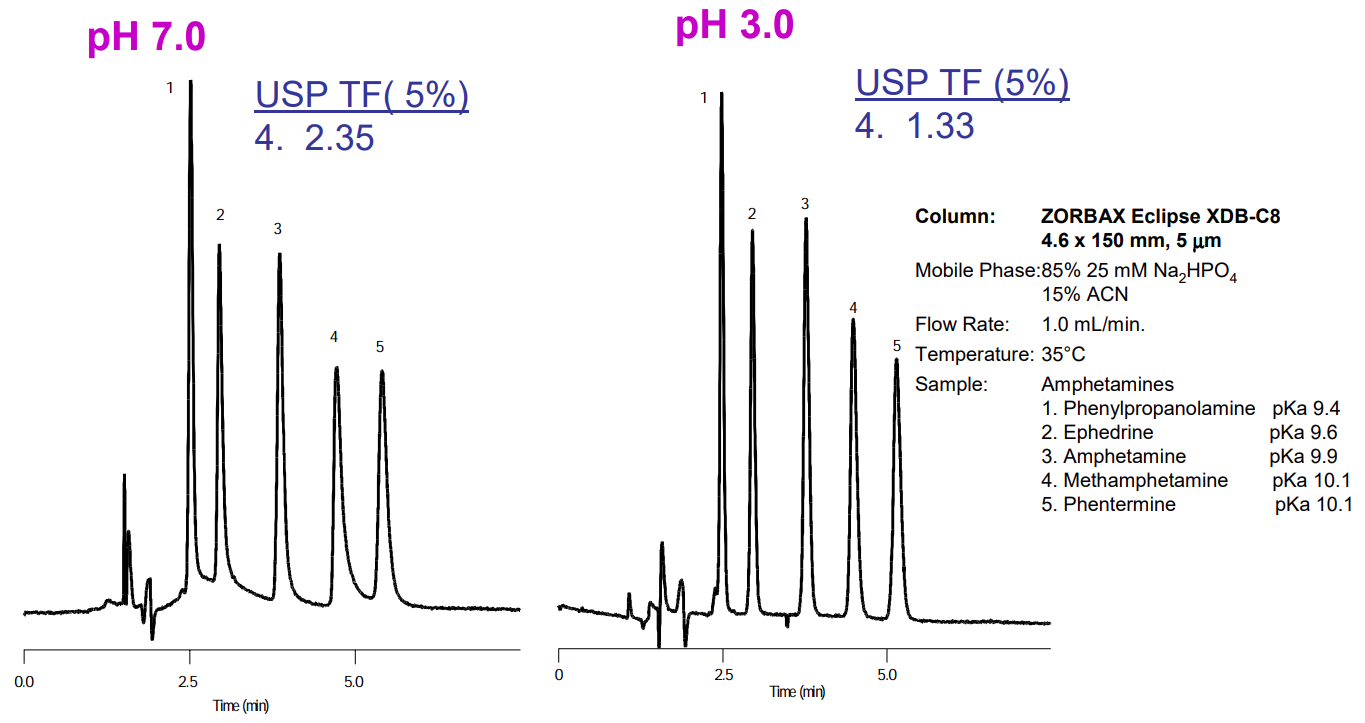
It is controlled by mobile phase. Ionized silanols () will ion-exchange with protonated bases (
) which can cause tailing and method variability. This occurs most often at mid pH where silanols are ionized. Some mobile phase additives can be added to the mobile phase to reduce these interactions.
$$ \textrm{SiO}^-\textrm{Na}^+ + \textrm{R}_3\textrm{NH}^+\quad \rightleftharpoons\quad \textrm{SiO}^-\textrm{N}^+\textrm{R}_3 + \textrm{Na}^+ $$
Column: Hydrogen bonding with silica silanols #
It is controlled by mobile phase. Unprotonated acids can compete for with protonated silanols. This can occur at low pH. Some mobile phase additives can be added to the mobile phase to reduce these interactions.
$$ \textrm{-SiOH}\ + \textrm{RCOO}^-\quad \rightleftharpoons\quad \textrm{-SiO}^-, \textrm{ …}, \textrm{ H}^+\ +\ \textrm{…}\ ^-\textrm{OOCR} $$
Column: Column bonding and endcapping #
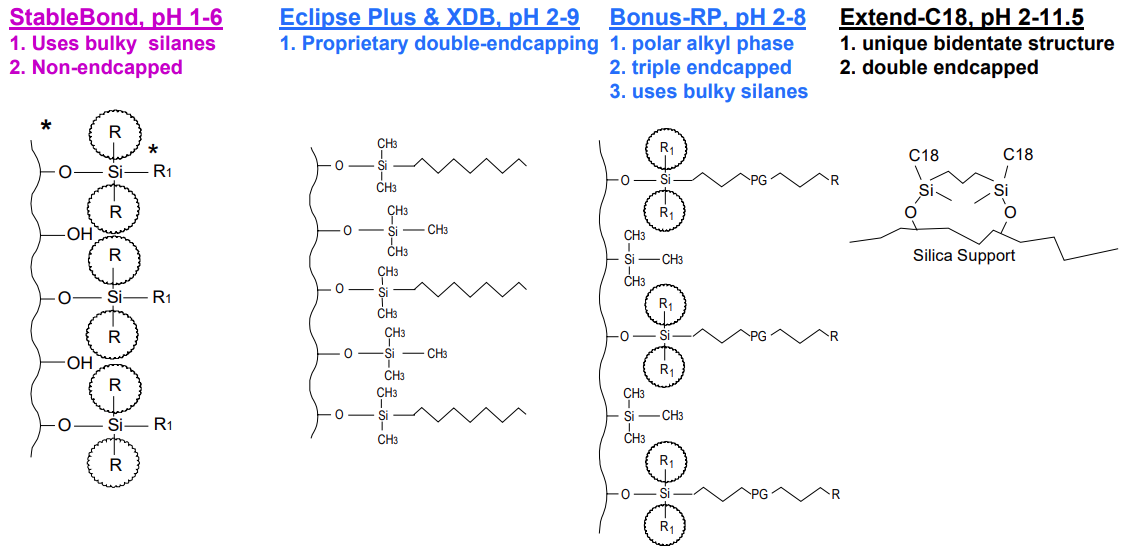
- Bonded phases with endcapping
- Most RP columns are endcapped.
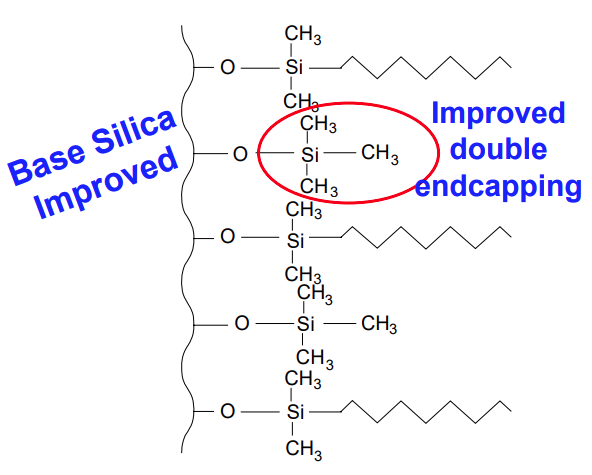
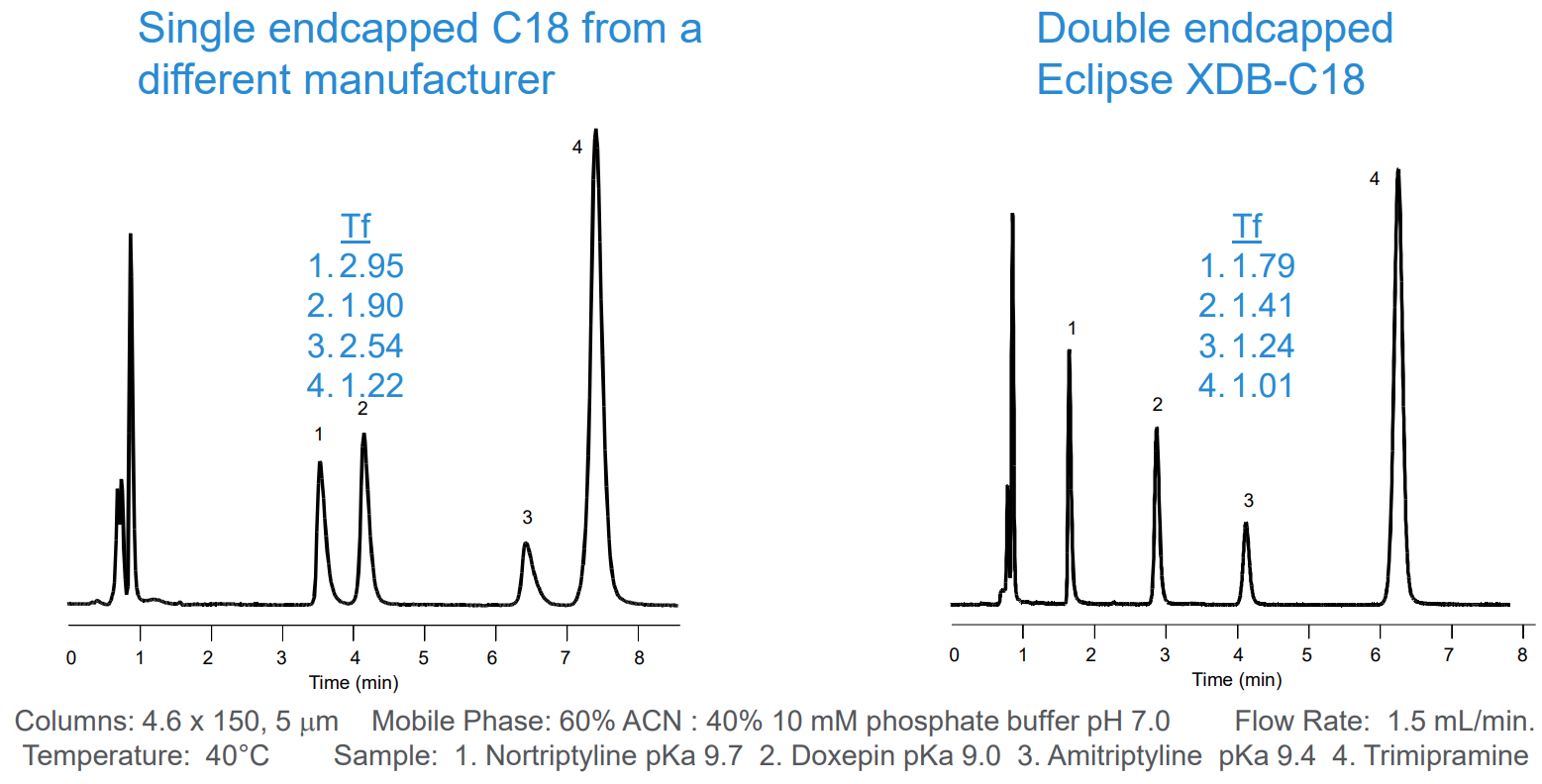
- Eclipse XDB columns are double endcapped.
- Double and triple endcapping minimizes the number of unreacted silanols and potential peak tailing interactions.
- Bonded phases with embedded polar groups
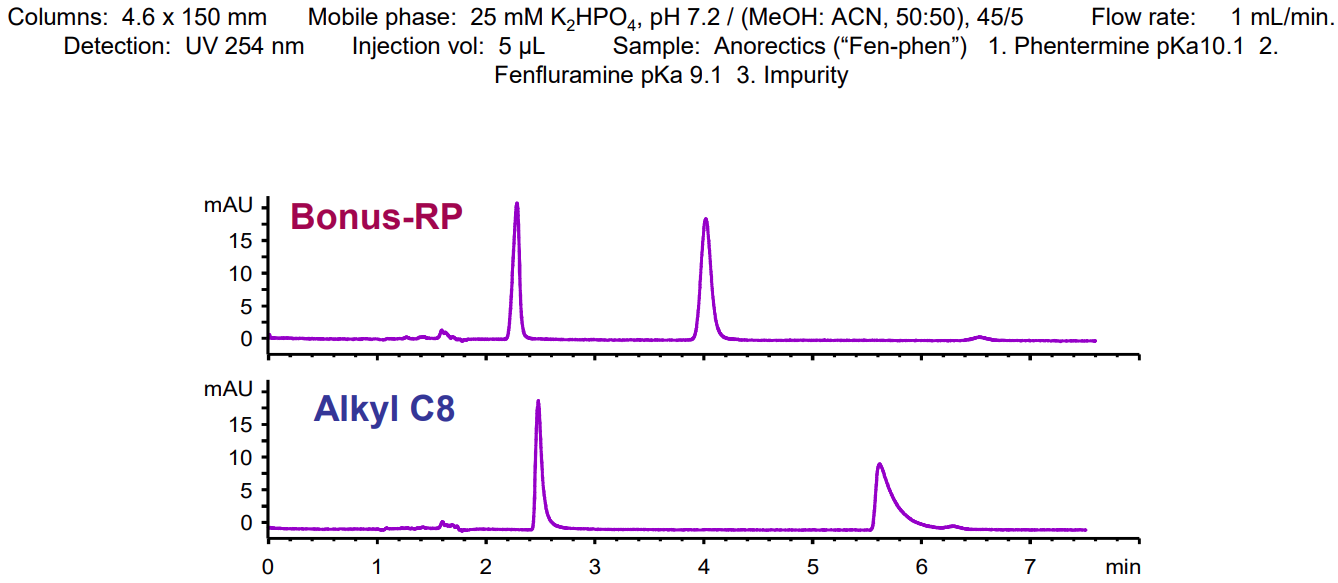
- Bonus-RP provides unique silanol shielding reducing peak tailing for basic compounds
- Bonded phases for high pH
- Extend-C18 is stable at high pH
- Basic compounds can not ion-exchange with the silica thereby reducing peak tailing
- Bonded phases for high aqueous
- SB-Aq is more “wettable” improving analyte interactions and peak shape
ZORBAX Bonding Technology #
- All purpose phases
- StableBond
- Eclipe XDB
- Exlipse Plus
- Rx-Silica support
- Ultra-pure
- Spherical, consistent pore size
- Fully-hydroxylated
- Sol gel maximizes strength and lifetime
- Application targeted phases
- Bonus-RP
- Extend
ZORBAX StableBond Bonding #
- Superior low pH stability – down to pH 1
- Non-endcapped for selectivity and lifetime
- Patented sterically protecting bonding
- 5 different selectivities - C18, C8, CN, Phenyl, C3
- Ideal for most sample types at low pH
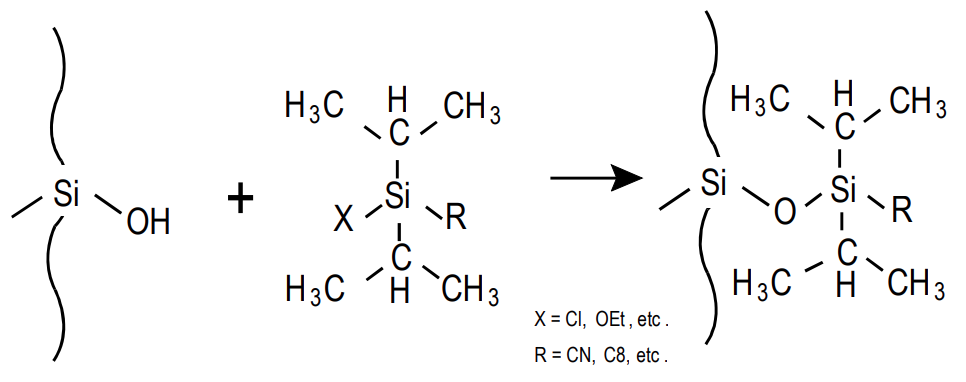
Note: R could also be Diisopropyl silanes or diisobutyl silanes (C18)
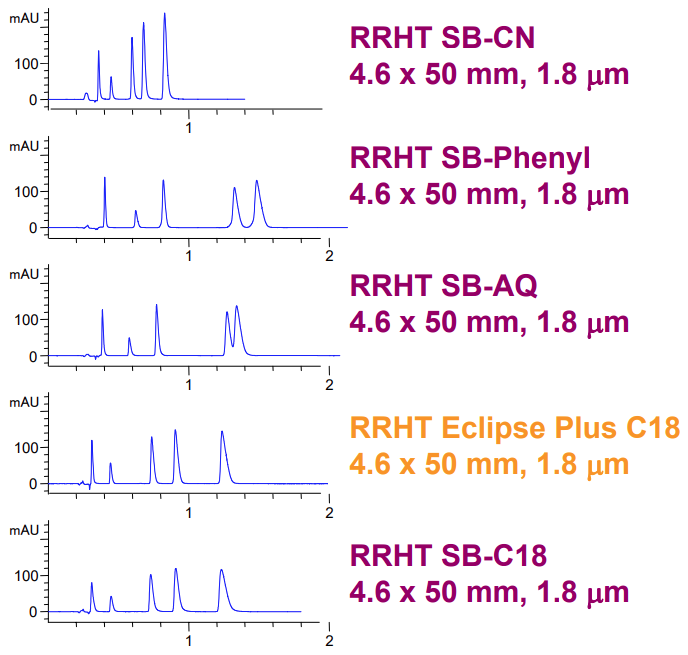
- 5 Different bonded phases compared
- Analysis time of each run is only 2 minutes
- Comparison done in optimum % organic
- The fast runs mean a comparison can be done even if you have a good separation on the C18
- More chances to optimize!
.png)
ZORBAX Eclips Plus & Eclipse XDB #
- Improved peak shape for basic compounds – especially at intermediate pH
- Double endcapped – with two different reagents for more complete silanol coverage
- Good for all sample types – acid, base, neutral
- Wide useable pH range – pH 2-9
- Pore size: XDB 80
, Plus 95
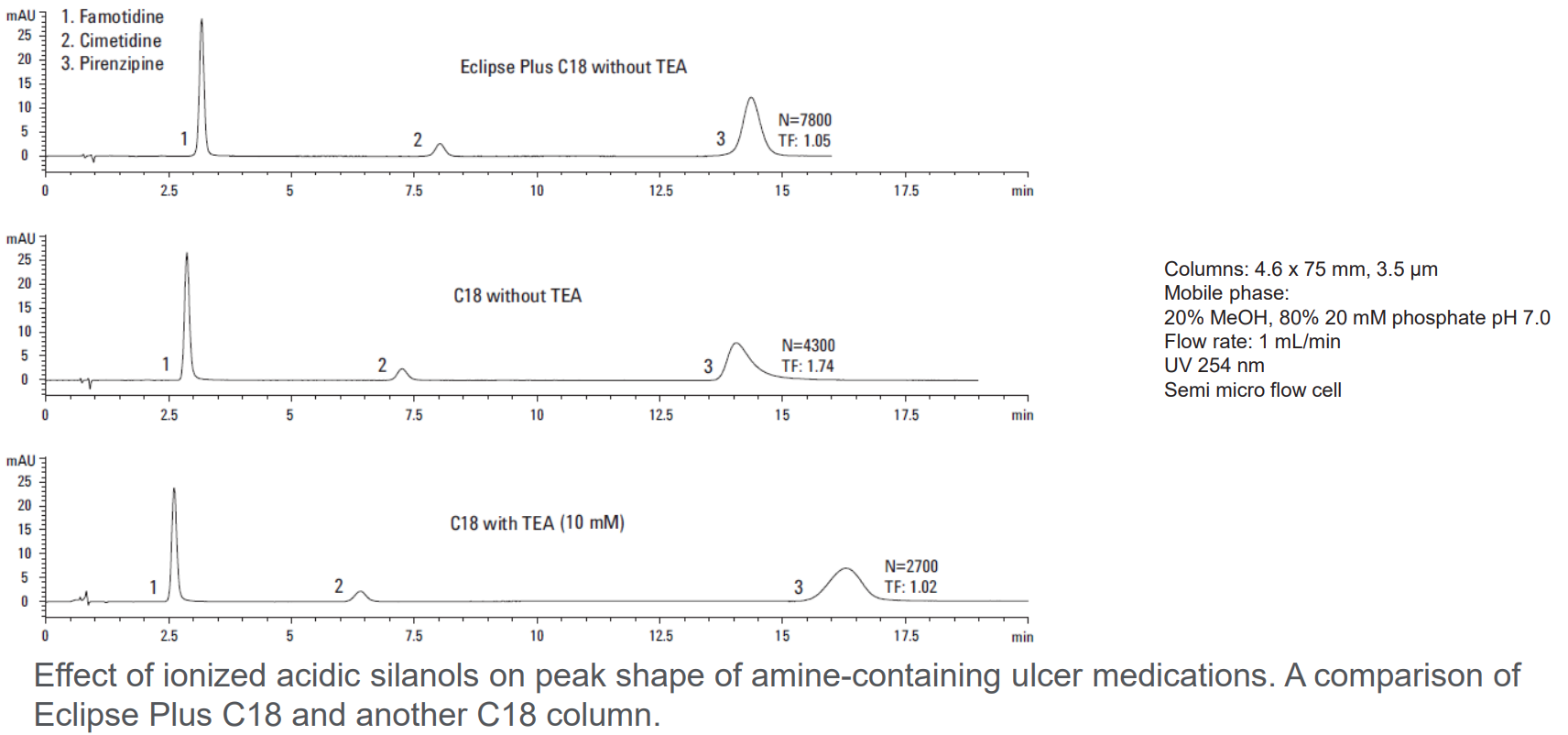
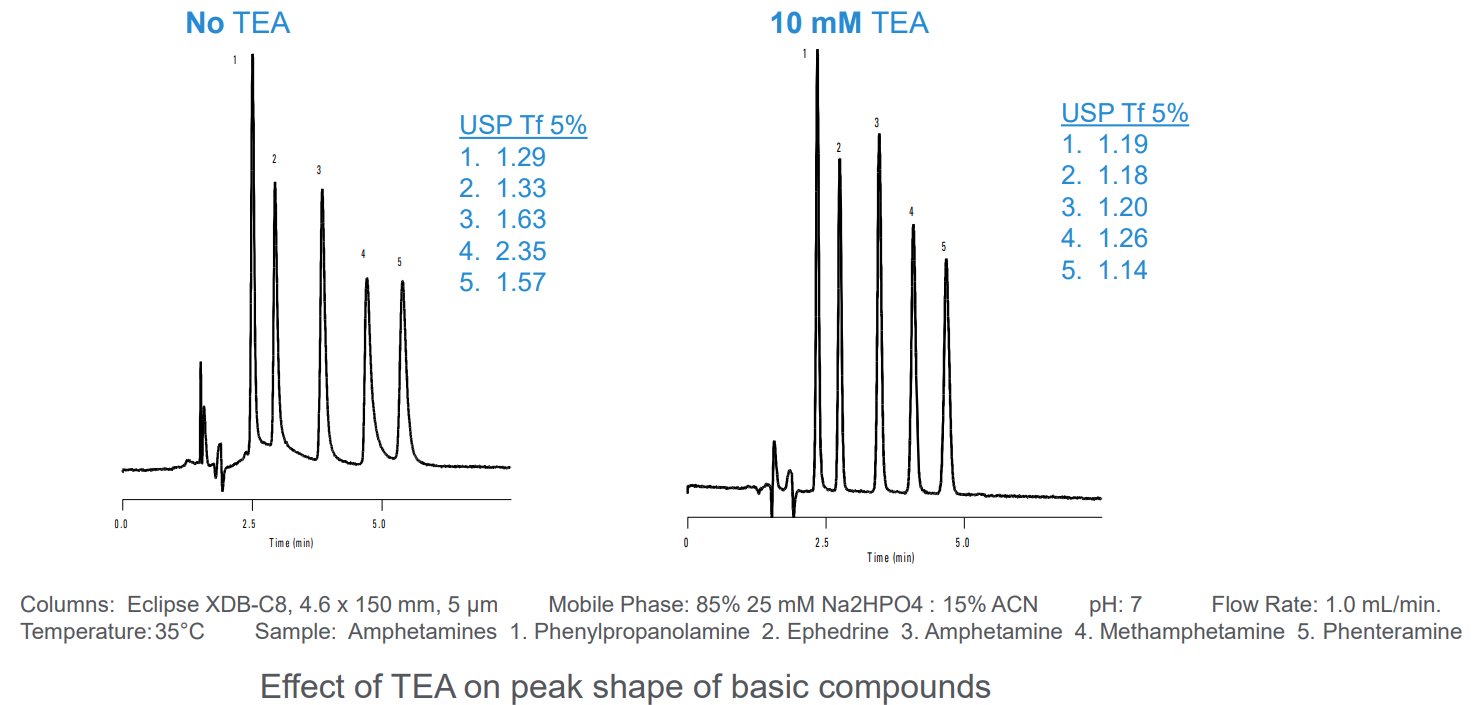
Note: TEA stands for triethylamine. Triethylamine is used to mask free silanol groups on the HPLC column and therefore it improves peak shape of the analytes.
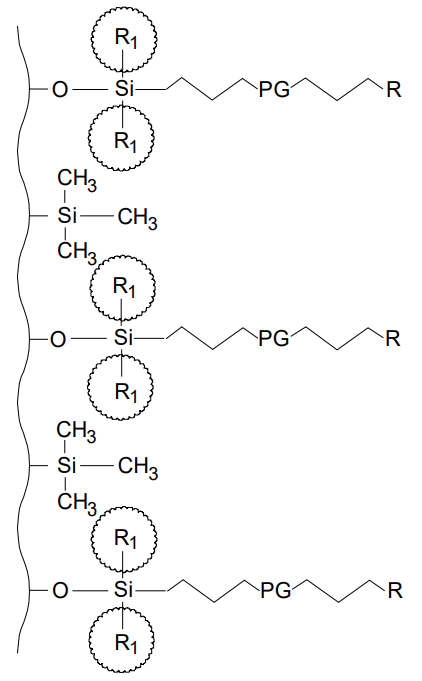
Bonded phases such as StableBond (which is not endcapped but has bulky side chain groups) sterically protect siloxane bonds from hydrolytic attack at low pH. SB columns are not endcapped to provide stability, lifetime, and reproducibility under acidic conditions.
Bonus-RP #
Bonded phases with embedded polar groups (Bonus-RP, Polaris-Amide-C18) or endcapped with polar groups, provide unique silanol shielding, reducing peak tailing for basic compounds.
- Good peak shape for basic compounds
- Polar alkyl-amide bonded phase
- Unique selectivity
- Enhanced low pH stability with sterically protecting bonding
- Triple endcapped
Poroshell 120 HPH #
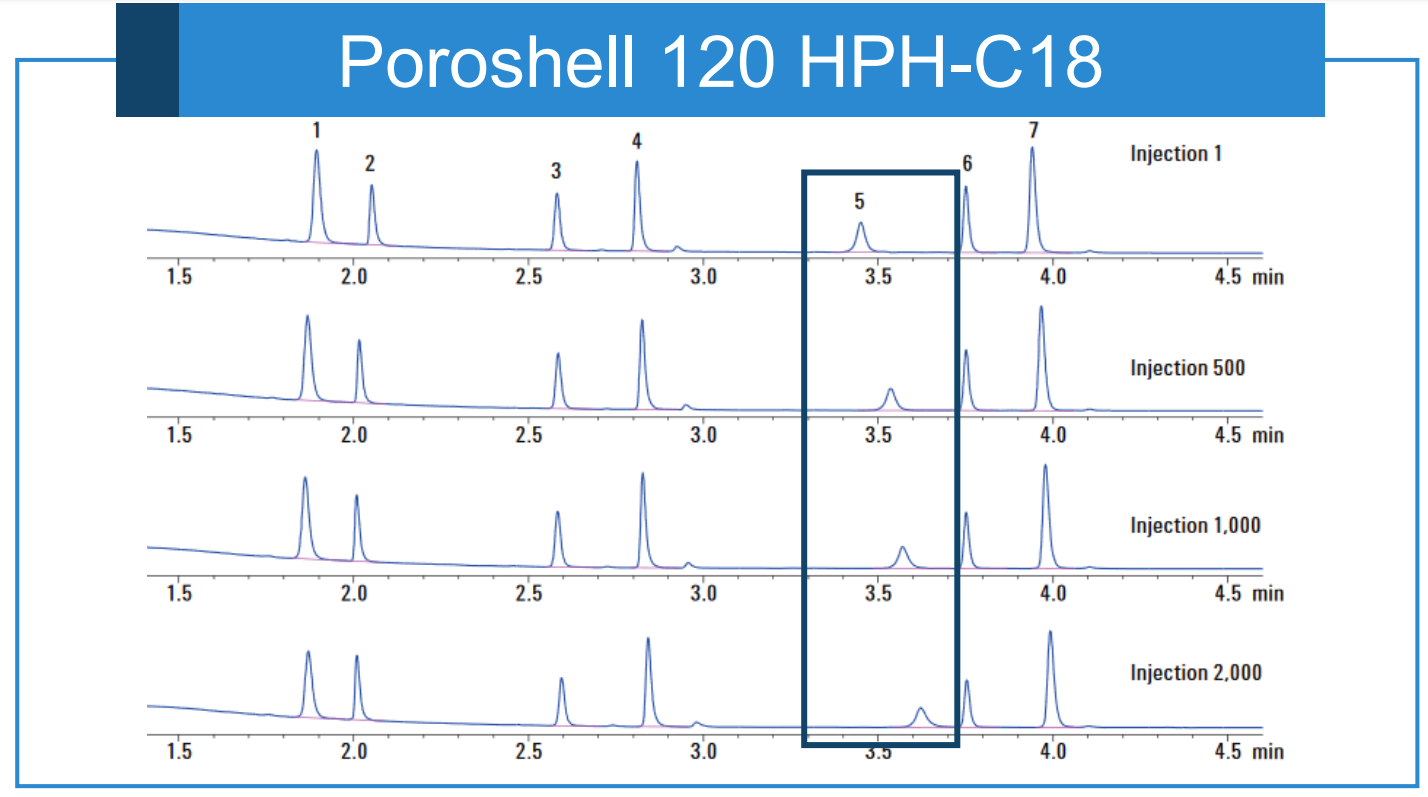
Bonded phases that are stable at a high pH (Poroshell 120 HPH and ZORBAX Extend C18) minimize the interaction of basic compounds with free silanols, which reduces peak tailing.
Poroshell HPH-C18 with hybridized particle surface and double endcapping is designed to withstand high pH with good peak shape.
ZORBAX Extend-C18 for high pH #
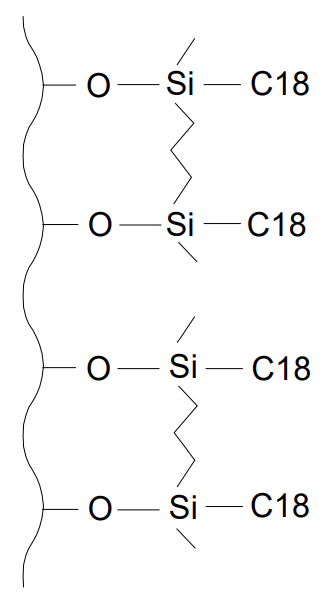
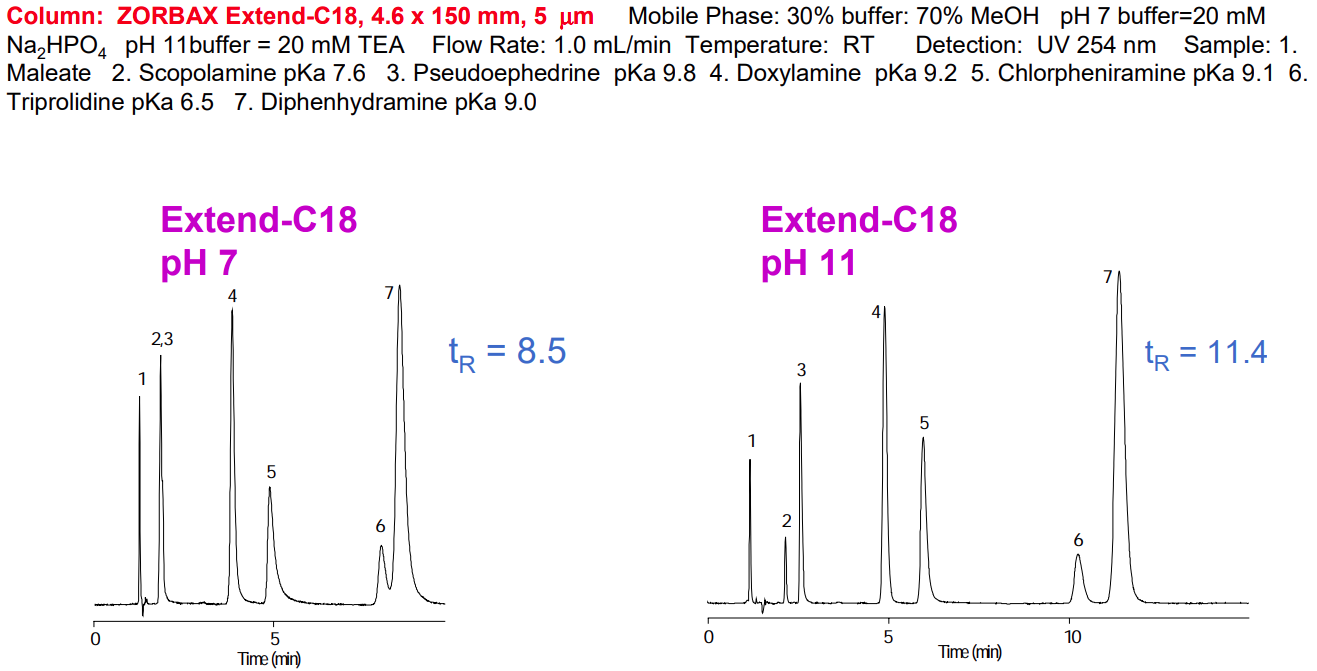
ZORBAX Extend-C18 is designed to withstand high pH with good peak shape.
- Superior high pH stability - up to pH 11.5 with silica particles.
- Excellent reproducibility.
- Patented bidentate, C18 bonding.
- Double endcapping.
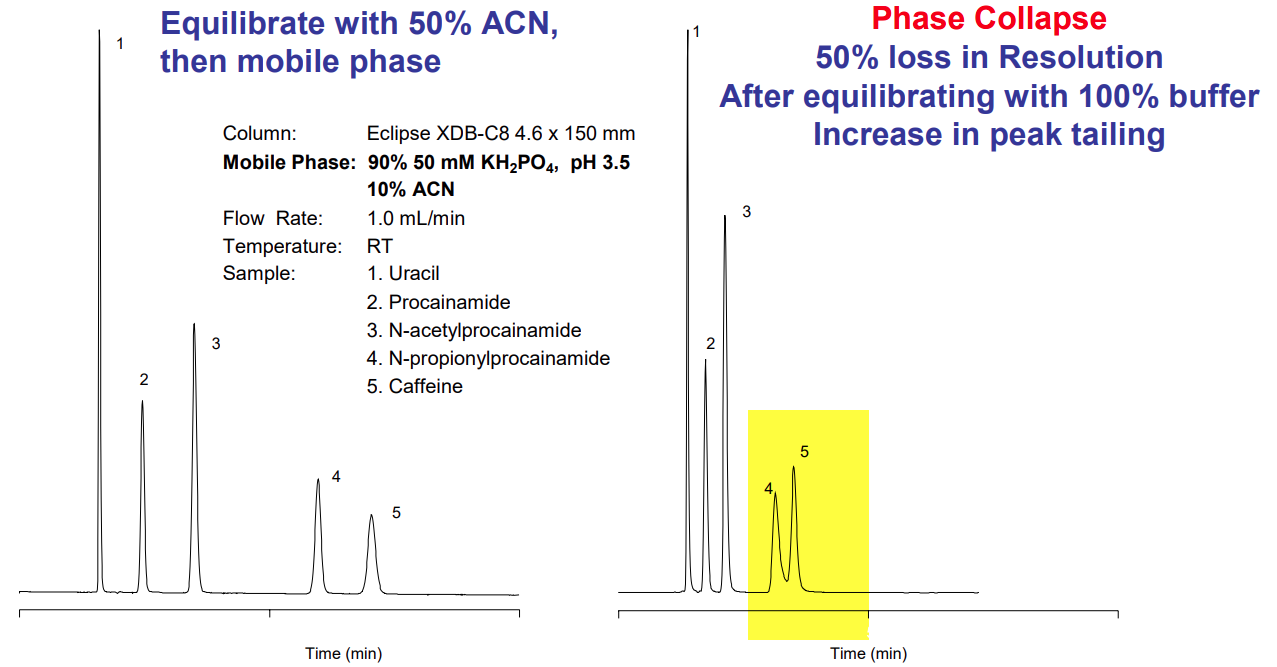
- Bonded phases that are more “wettable” in high aqueous mobile phases improve chromatography - both peak shape and retention reproducibility.
- A “wettable” bonded phase is one that does not fold over or collapse in a high aqueous mobile phase.
- These types of bonded phases can have polar endcapping or polar groups in the bonded phase, or other modifications to increase polarity.
- The SB-Aq column is an alkyl chain with more polar character that a typical C18 column.
Column: column packing: Pore size #
To get good peak shape, select column pore size according to the size of analyte molecules, large molecules needs large pore sizes.
-
To separate proteins and peptides, select wide-pore (300
-
For more rapid mass transfer and improved efficiency of large peptides and proteins at higher flow rates, select superficially porous Poroshell 300 columns.
-
For small molecules as well as peptides for improved efficiency at higher flow rates, select superficially porous Poroshell 120 columns.
-
For small molecules, select small-pore totally particle columns.
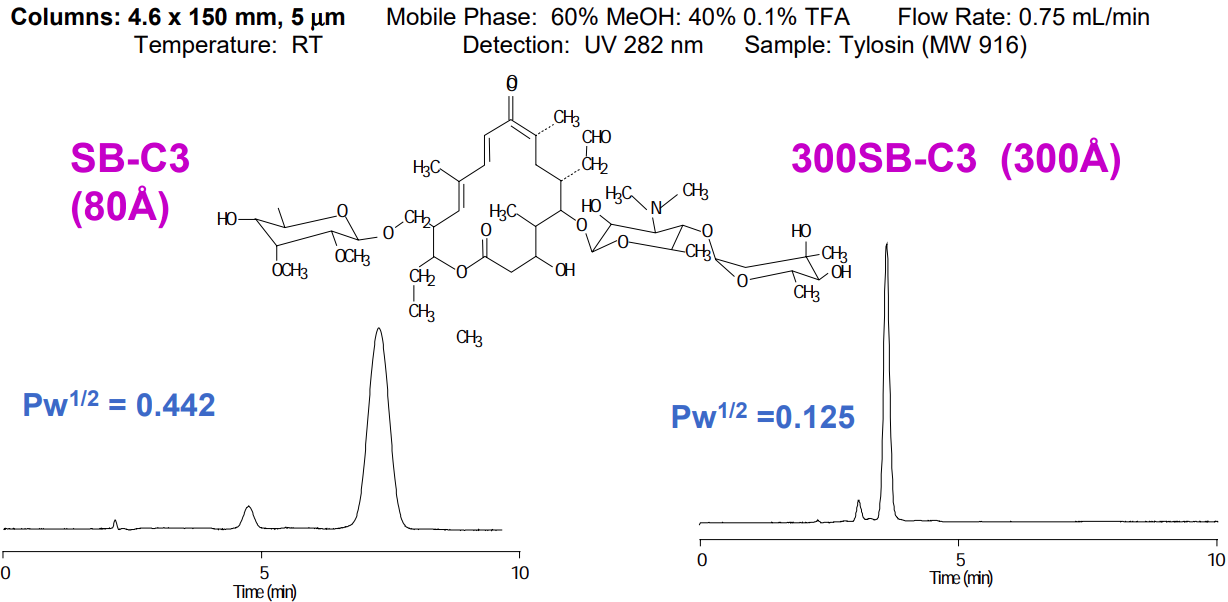
- The narrower peak width indicates unrestricted access to the pores.
Column: column packing: Poroshell particle technology #
-
Superficially porous, solid core particles with a porous outer layer - they provide both improved throughput and higher resolution.
-
Superior peak shapes for faster, more accurate, results due to high-purity silica and advanced bonding chemistries.
-
Poroshell 120, 4 μm columns can provide higher efficiency at higher flow rates compared to 5 μm totally porous columns.
-
Poroshell 120, 2.7 μm columns can achieve similar efficiencies as sub-2 μm totally porous columns with substantially less pressure.
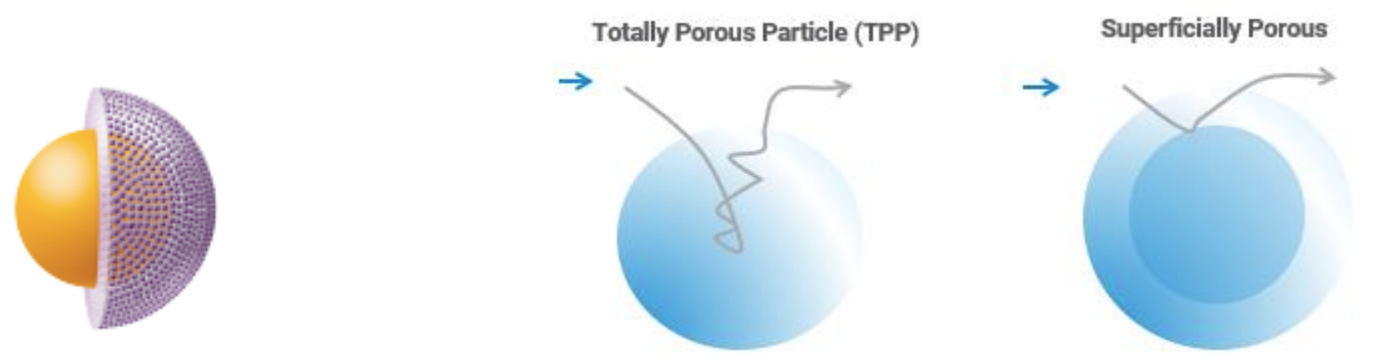
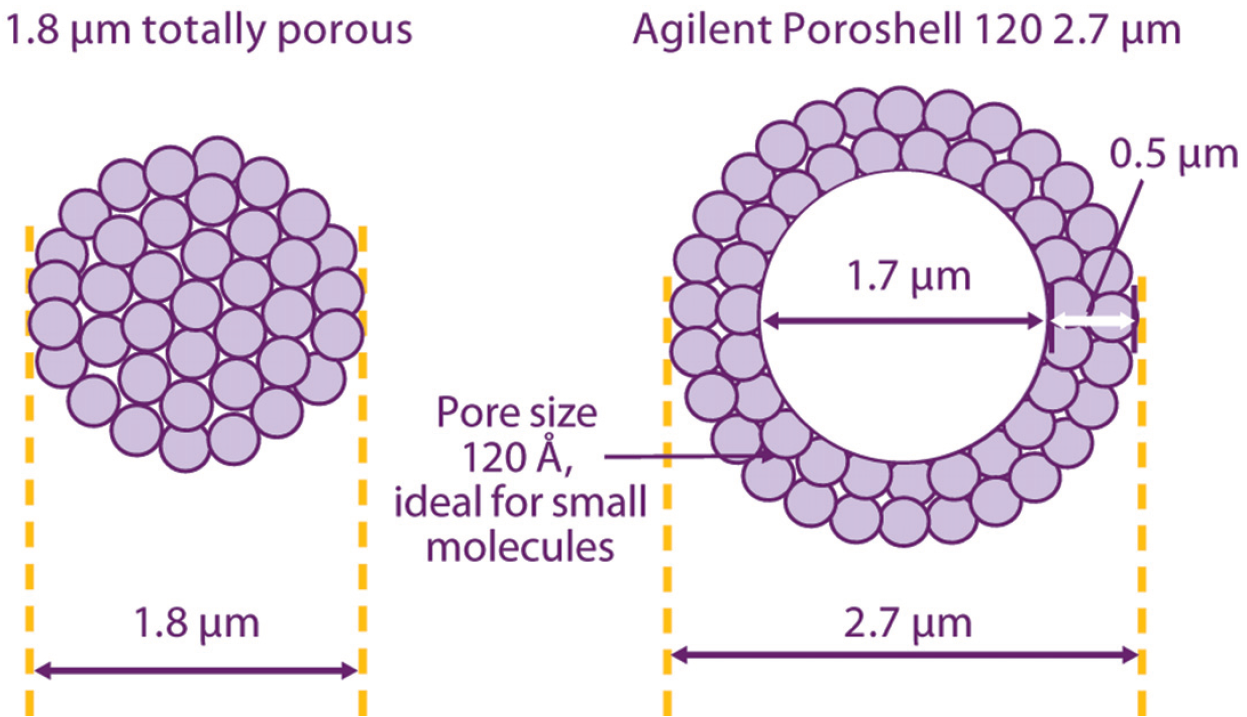
- Poroshell 120, 1.9 μm columns can achieve superior efficiencies over totally porous sub-2 μm columns.
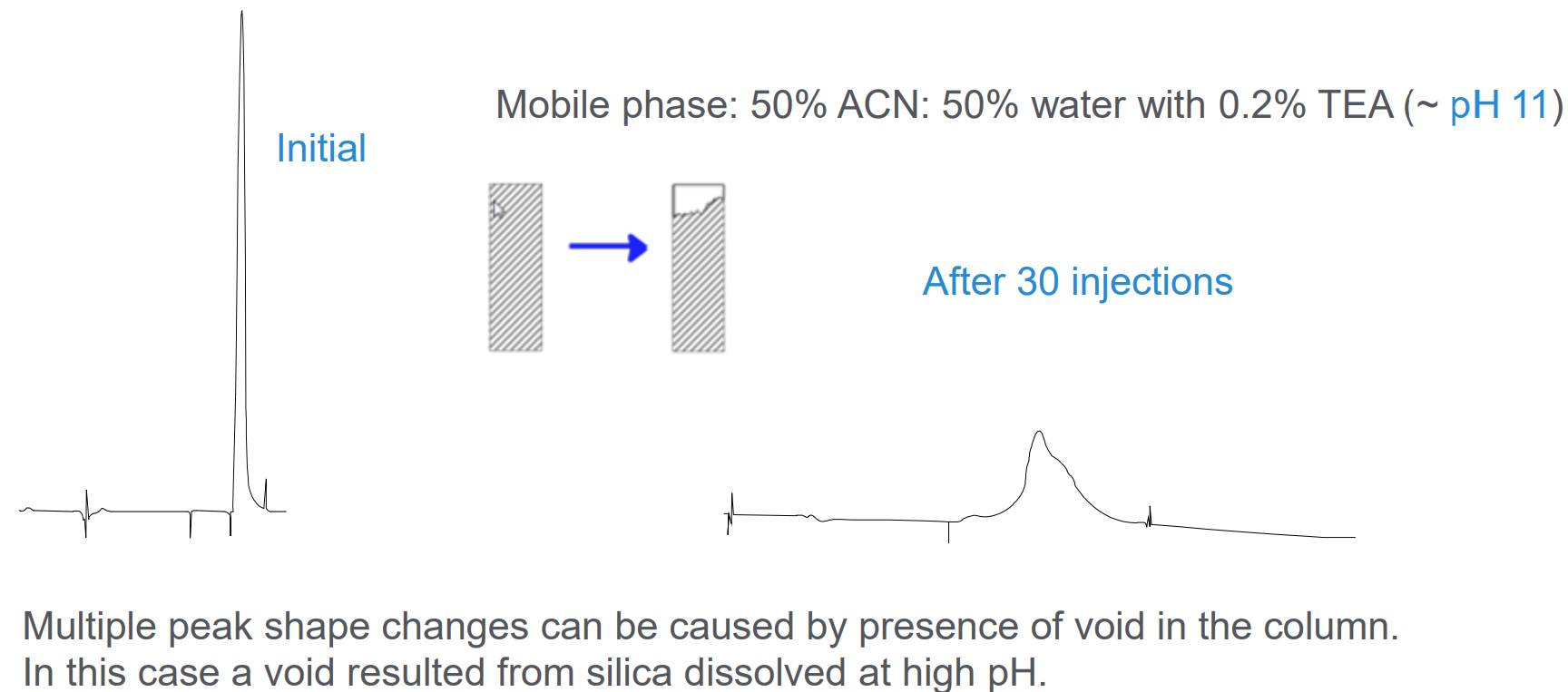
Column: column packing: Formation of void in the column #
Mobile Phase: pH #
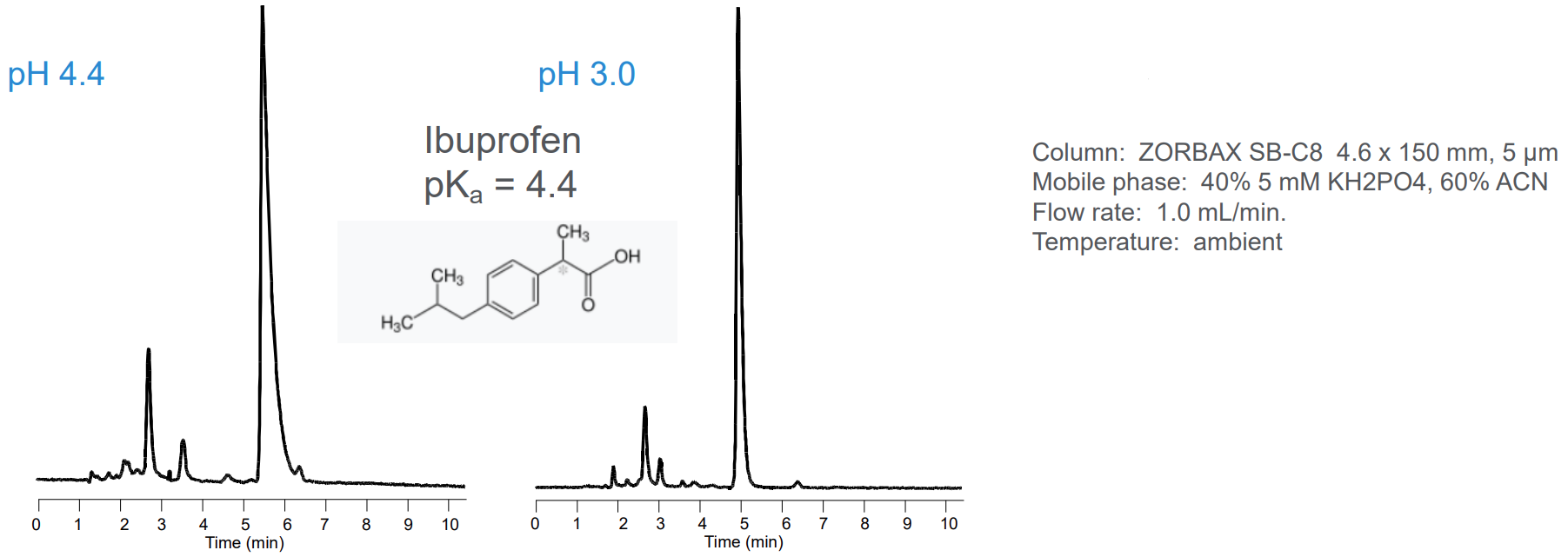
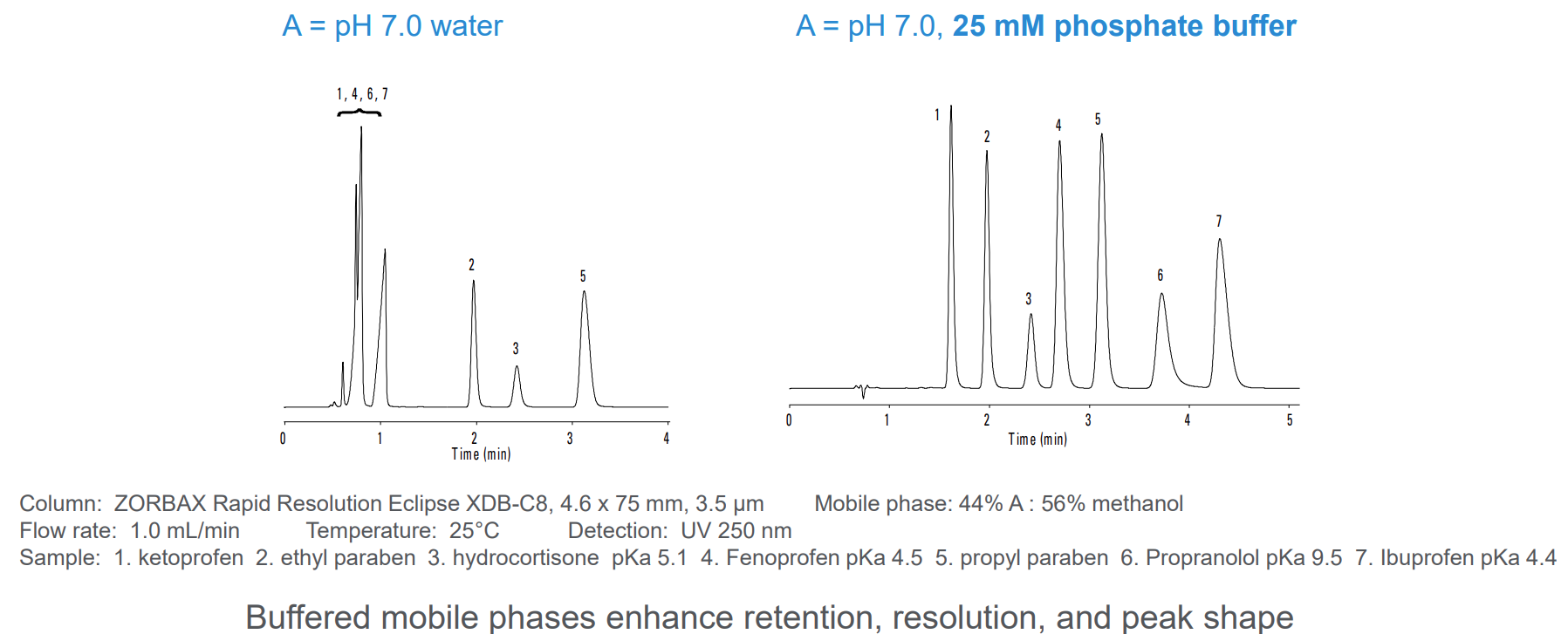
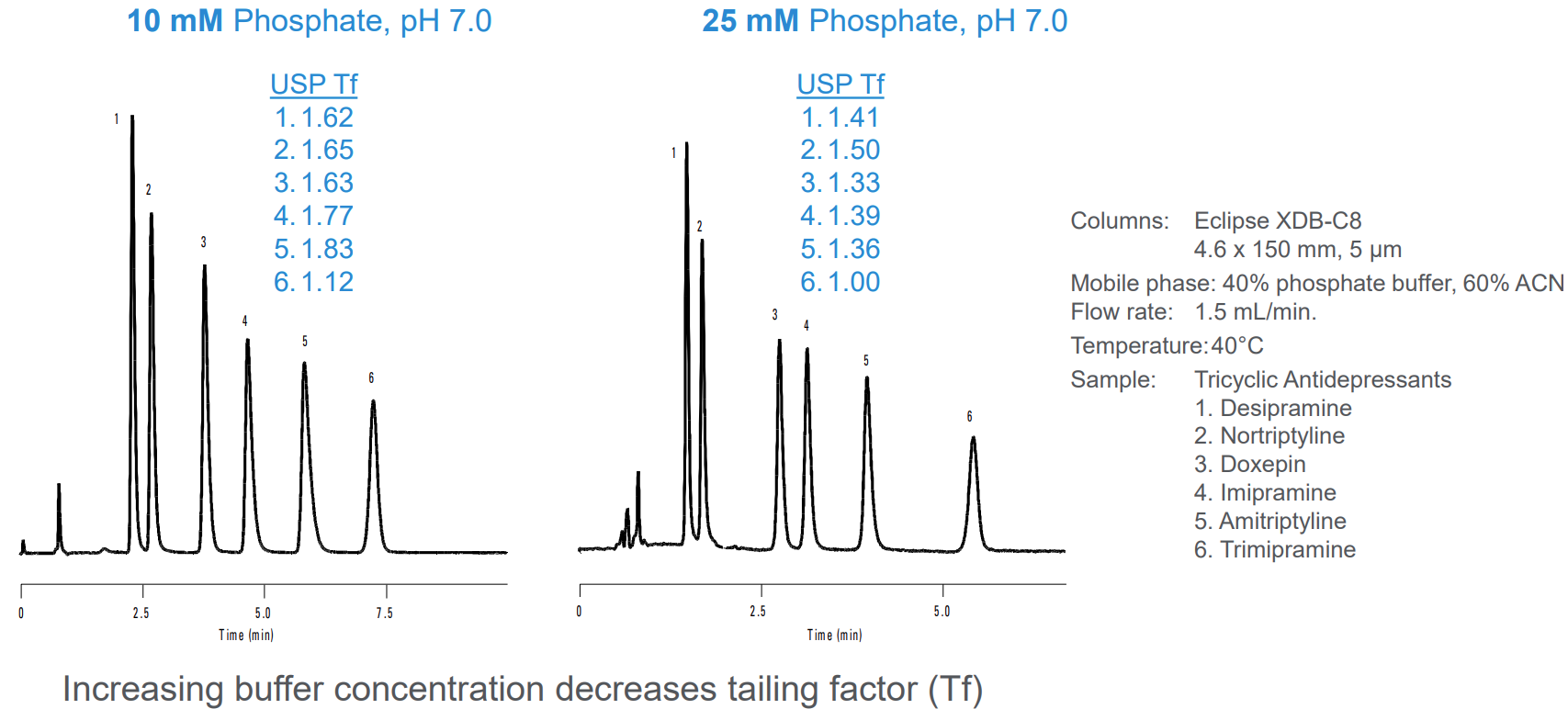
Mobile Phase: Buffer #
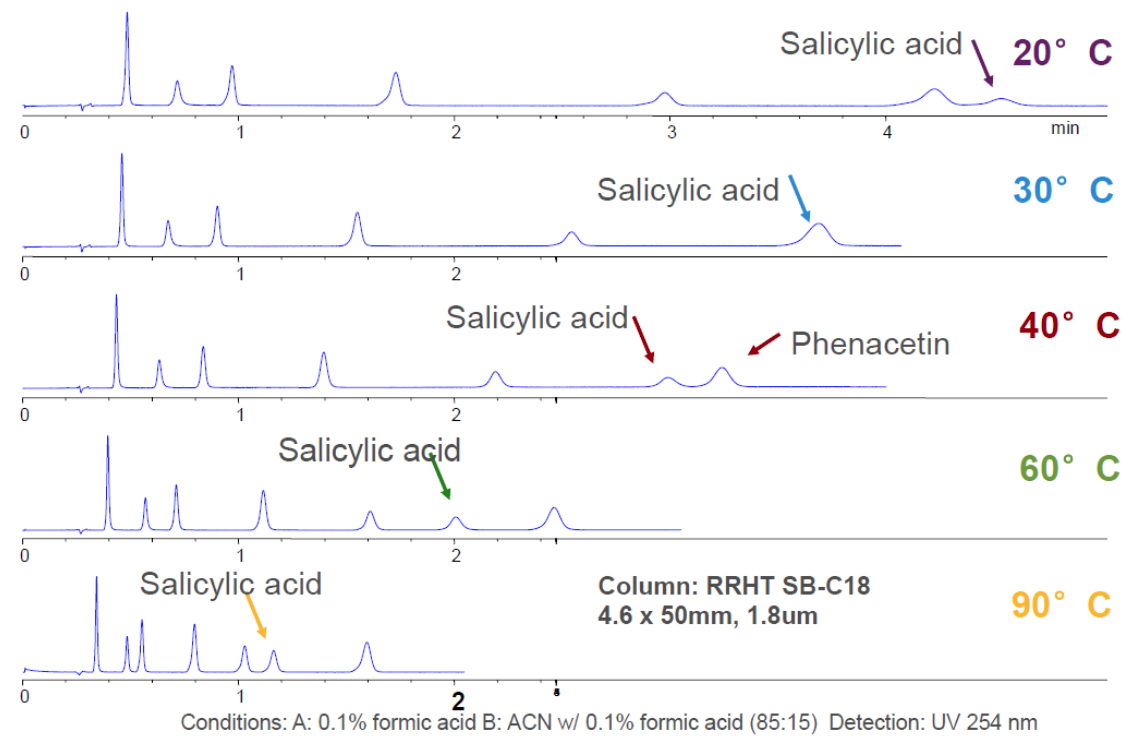
Mobile Phase: Temperature #
Mobile Phase: Organic modifiers #
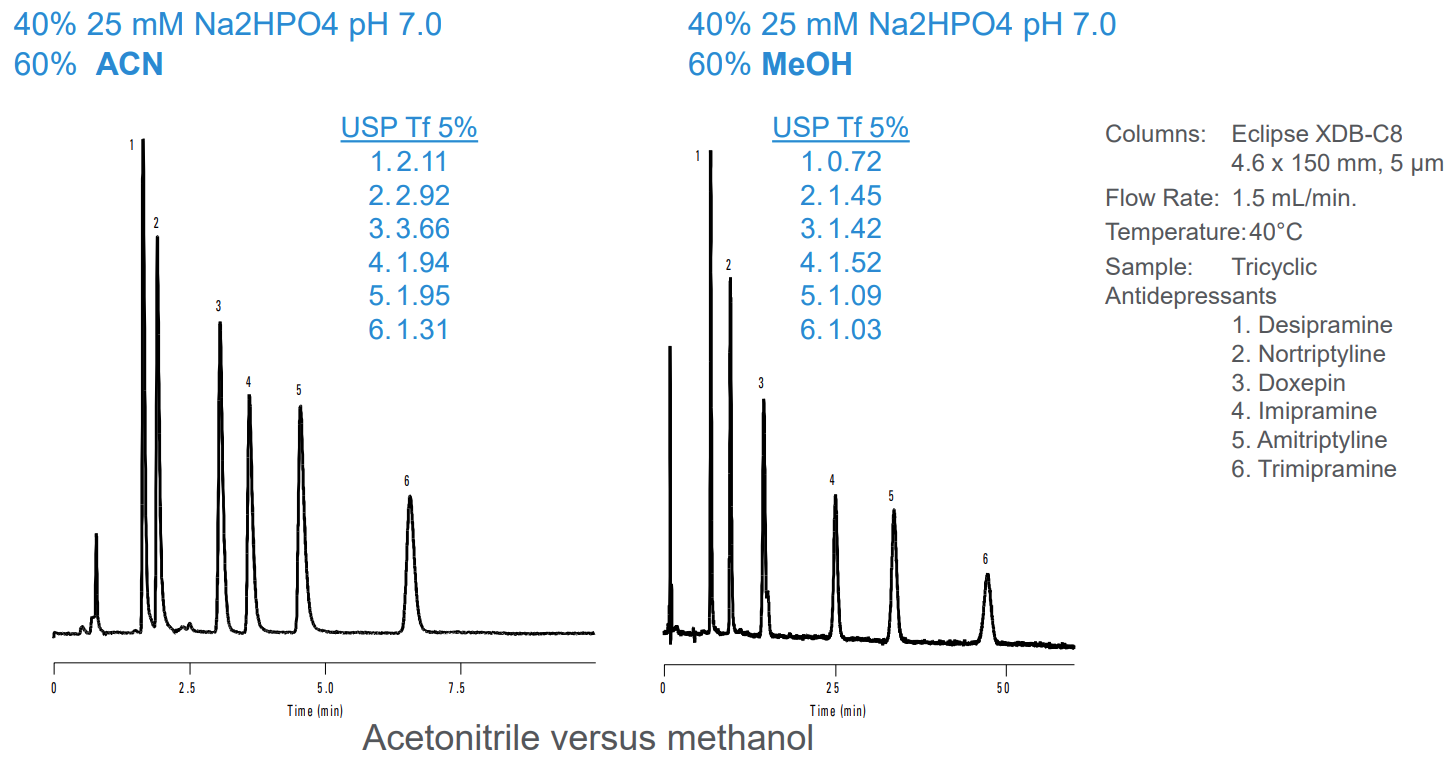
Mobile Phase: Mobile phase additives (TEA, TFA, etc.) #
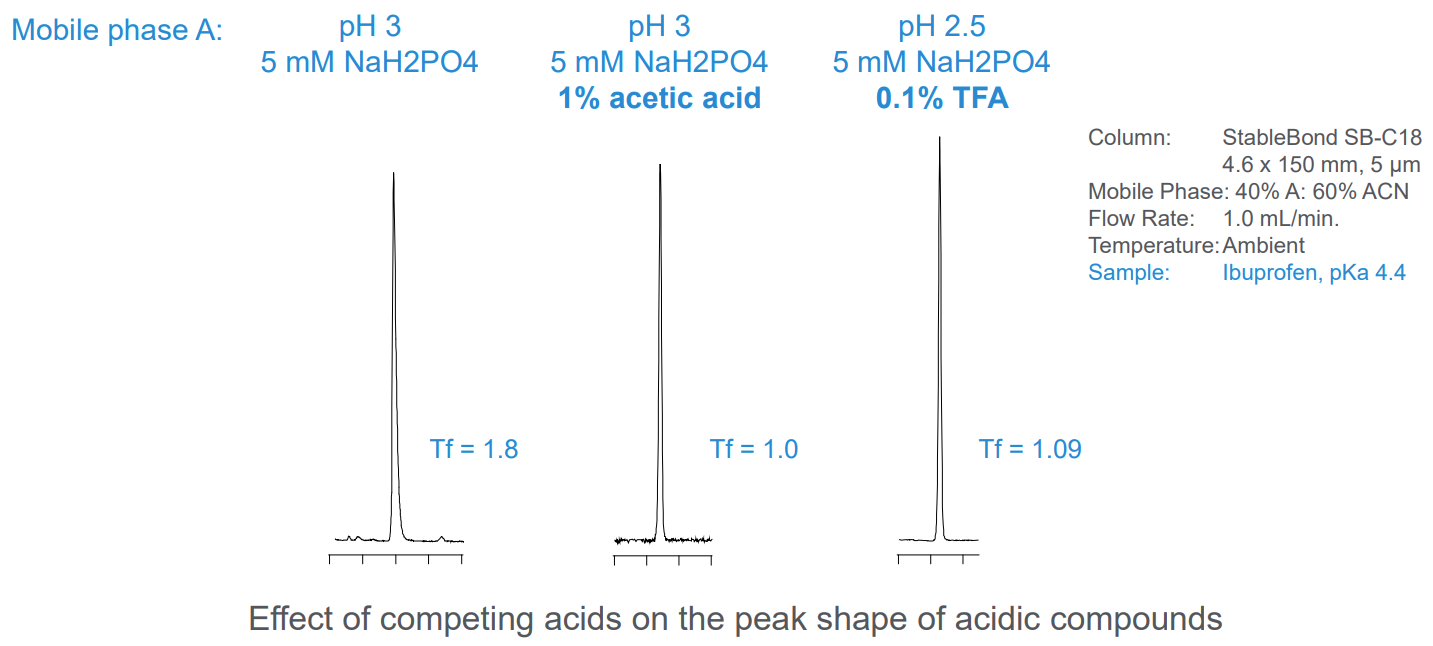
- Both acetic acid and TFA (trifluoroacetic acid) act as competing acids.
- TFA can be used at a lower concentration and is the preferred choice.
Connecting capillaries and fittings #
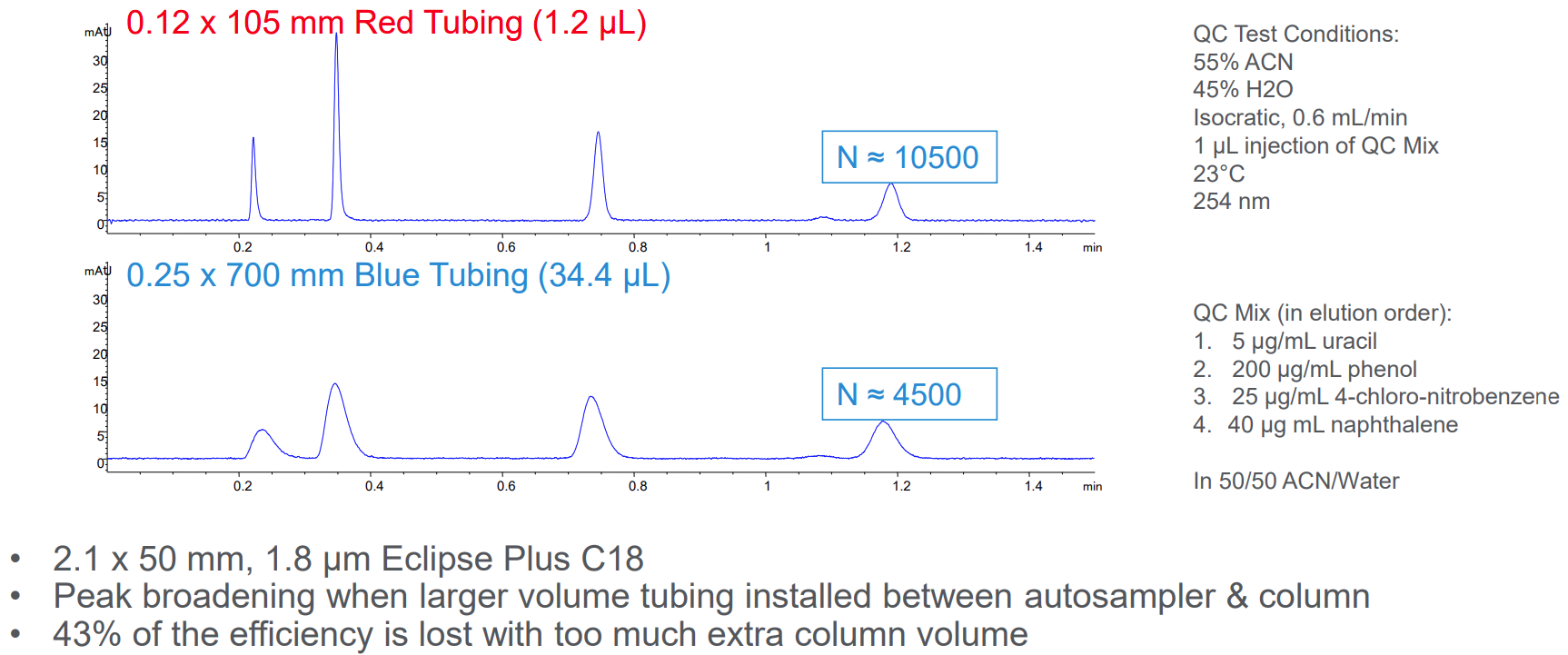
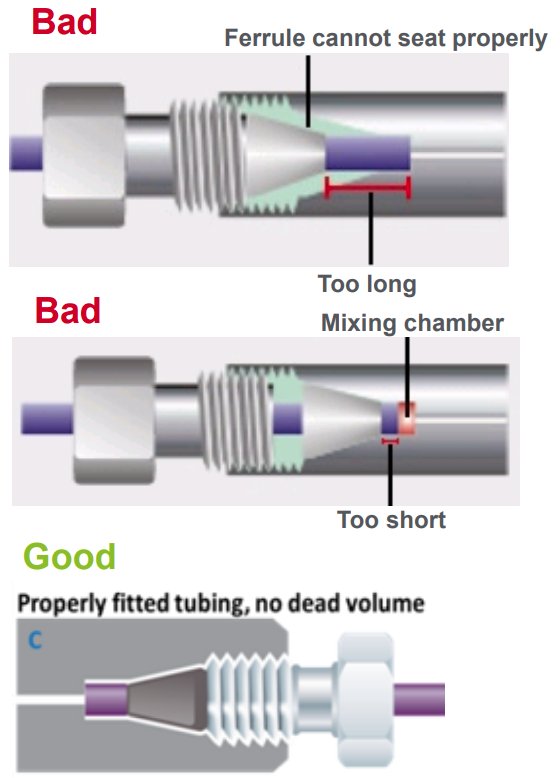
- Improper fittings can lead to broad, split and tailing peaks.
- Different manufacturers supply different types of fittings.
- Use fittings recommended for your system.
- Agilent LLC systems use Swagelok-type fittings for many instrument connections.
Fittings #
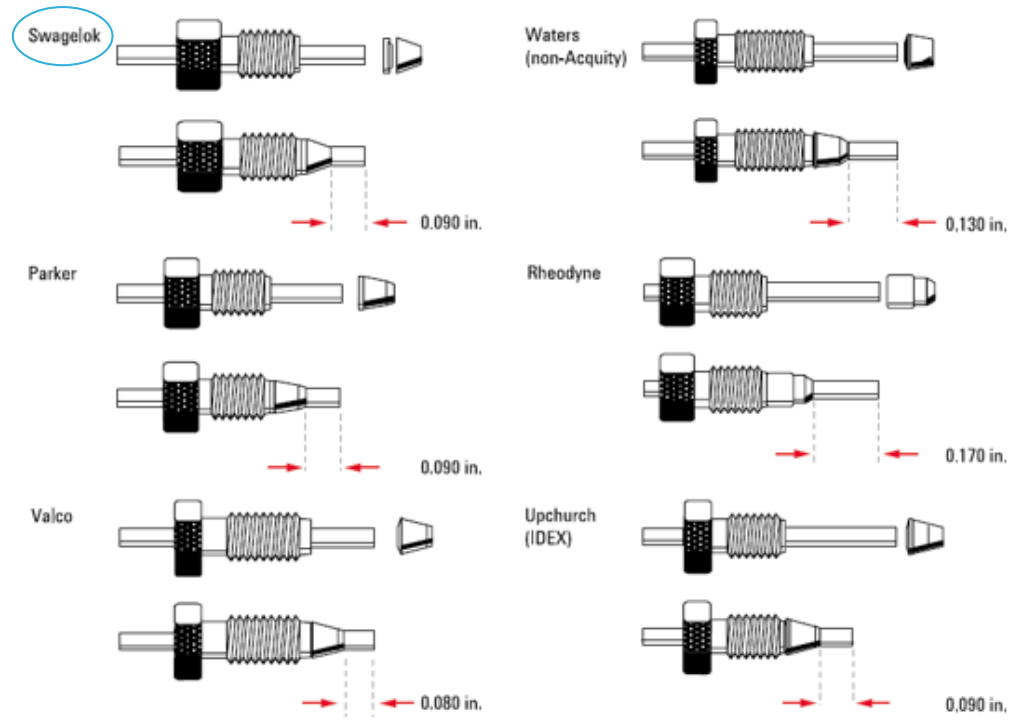
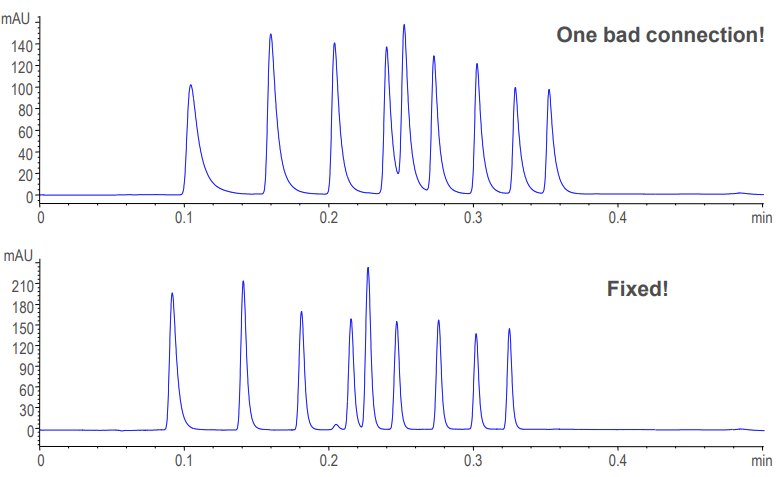
Fitting Connections #
Poor-fitting connections:
- will broaden or split peaks or cause tailing
- will typically affect all peaks, but especially early eluting peaks
- Can cause of carry-over
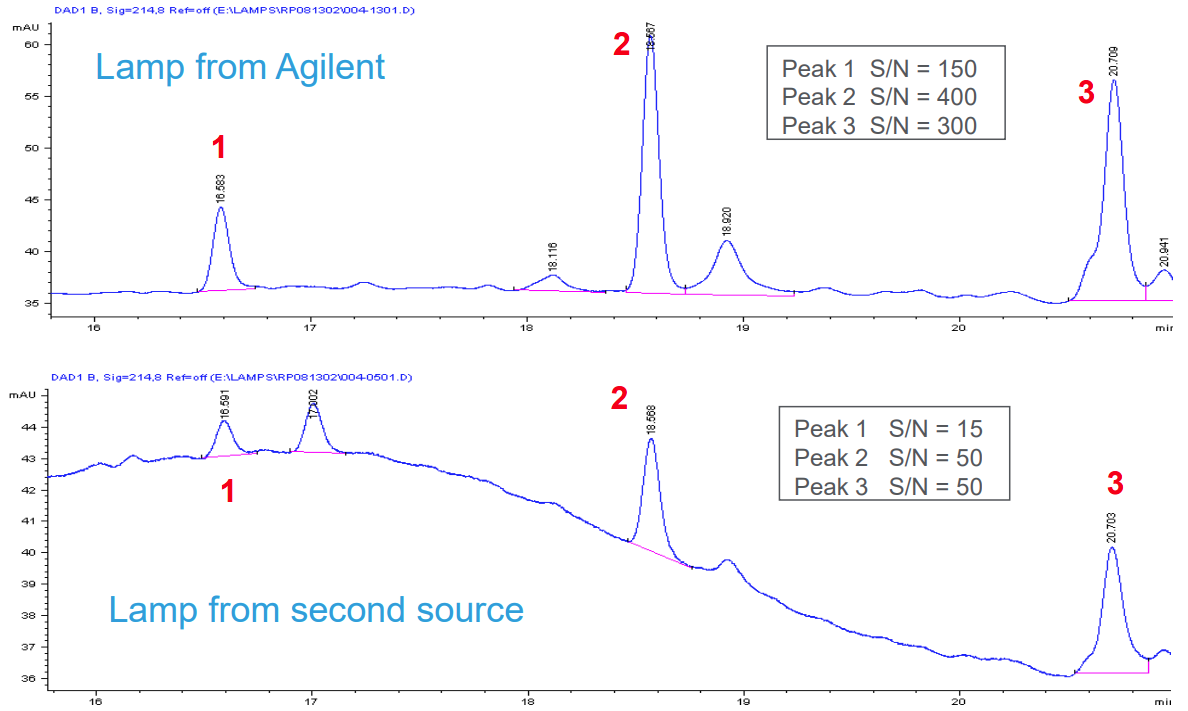
Detector Lamp Performance #
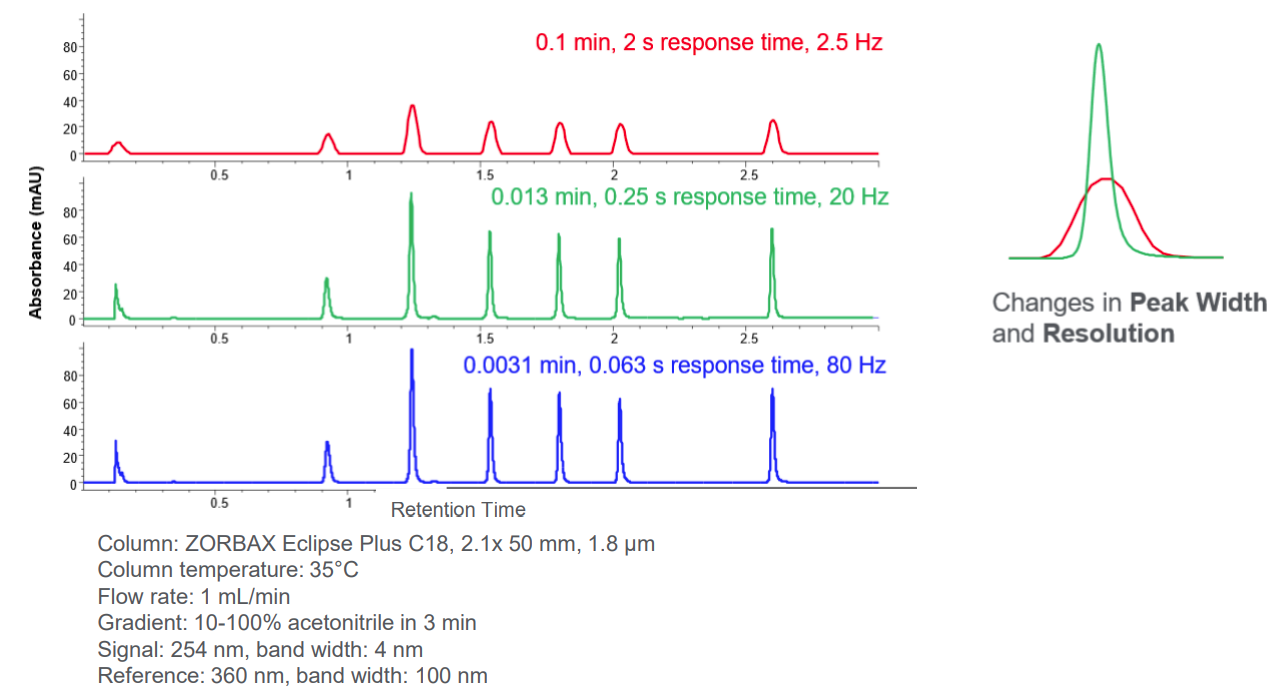
System related factors: Flow cells #
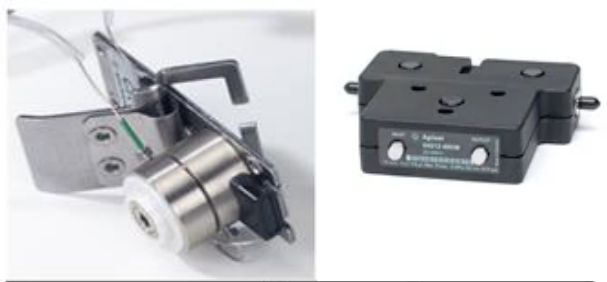
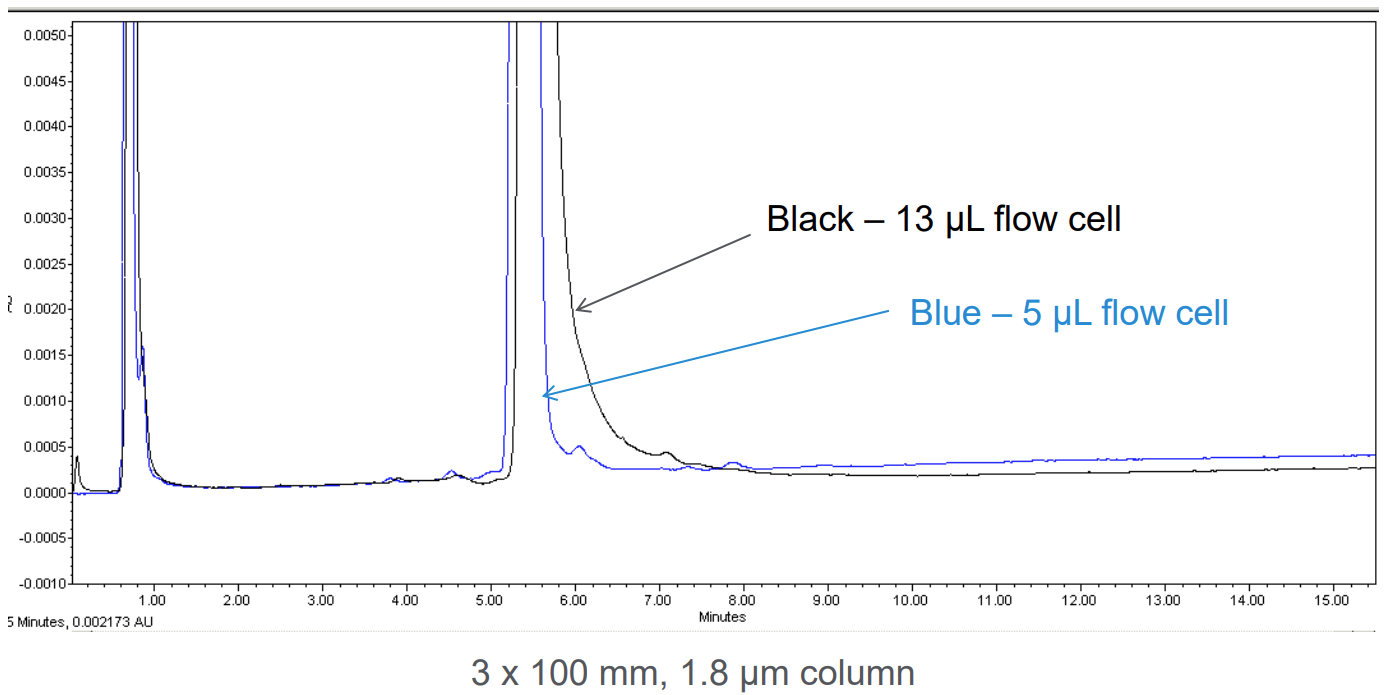
Flow Cell | UV Signal/Noise | Chrom. Resolution | Application |
|---|---|---|---|
13 μL/10 mm |
+++ |
+ |
for highest sensitivity and linearity 4.6 - 3 mm ID, 2.7, 3.5, 5 μm columns |
5 μL / 6 mm |
++ | ++ |
Best compromise of sensitivity & selectivity HPLC/UPHPLC, 1.8 to 5 μm 4.6 - 1 mm ID columns |
1.7 μL / 6 mm |
+ | +++ |
For highest resolution UHPLC, 1.8, 2.7 μm 2.1 - 1 mm ID columns |
Other flow cells include:
- Max-light cartridge cells for Infinity DAD
- 500 nL for capilary LC
- 80 nL for nano LC
- 0.6 mm for Prep LC
Sample-related Factors: Sample Load #
Sample overload may cause peak fronting/broadening/splitting/doubling.
- Peak fronting from sample overload - more sample than can effectively partition, results in some sample preceding the rest of the peak
- Reduce sample load to eliminate the problem

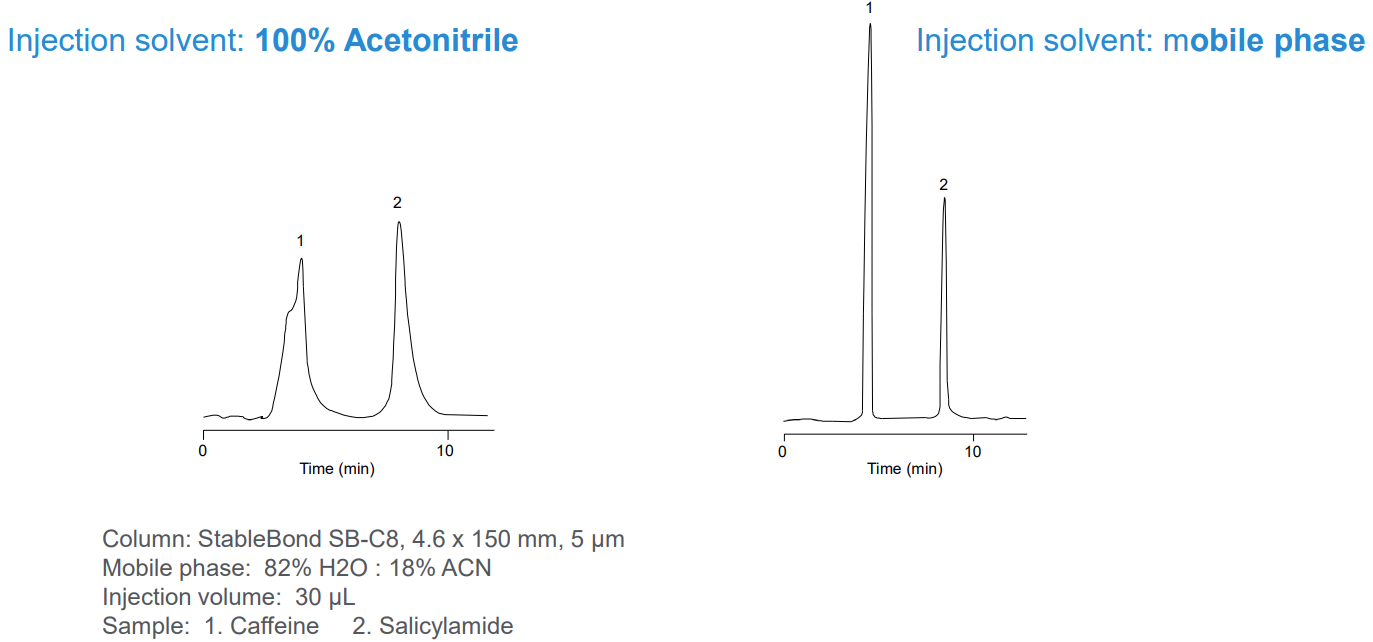
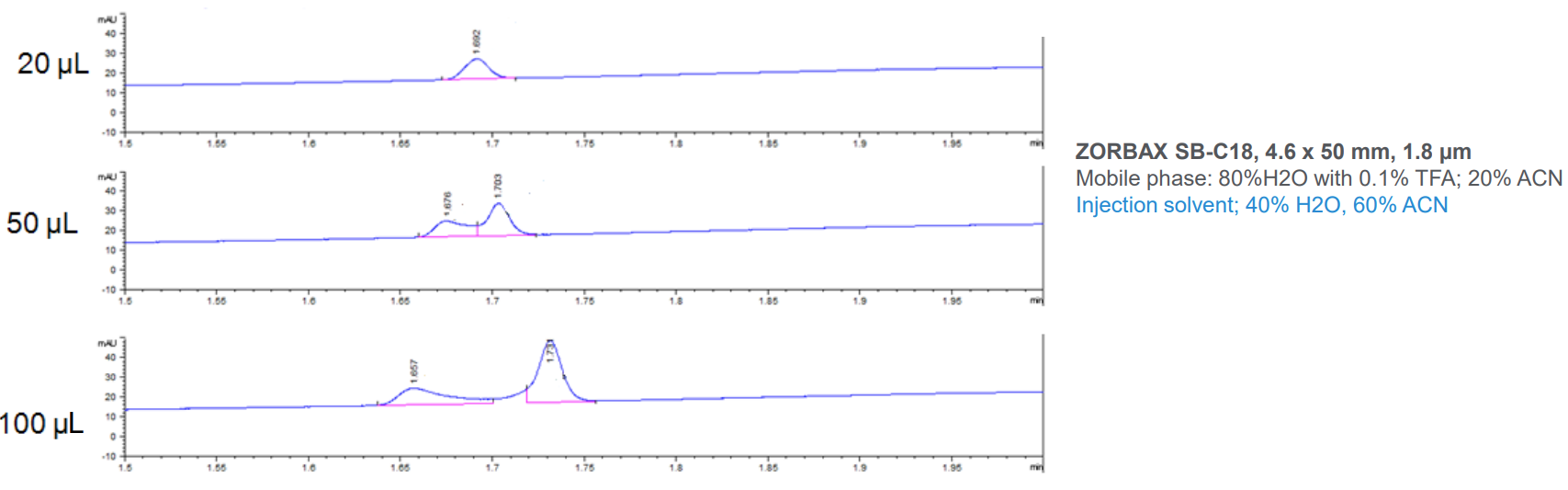
Sample-related Factors: Sample solvent strength #
Sample-related Factors: Sample cleanliness #
- Dirty samples can partially clog the column inlet frits, causing split peaks.
- Chemical contamination from the sample can reside on the column and cause secondary interactions with analytes, resulting in peak tailing and broad peaks.
- Physical and chemical filtration can minimize these problems.

Sample-related Factors: Metal complexation #
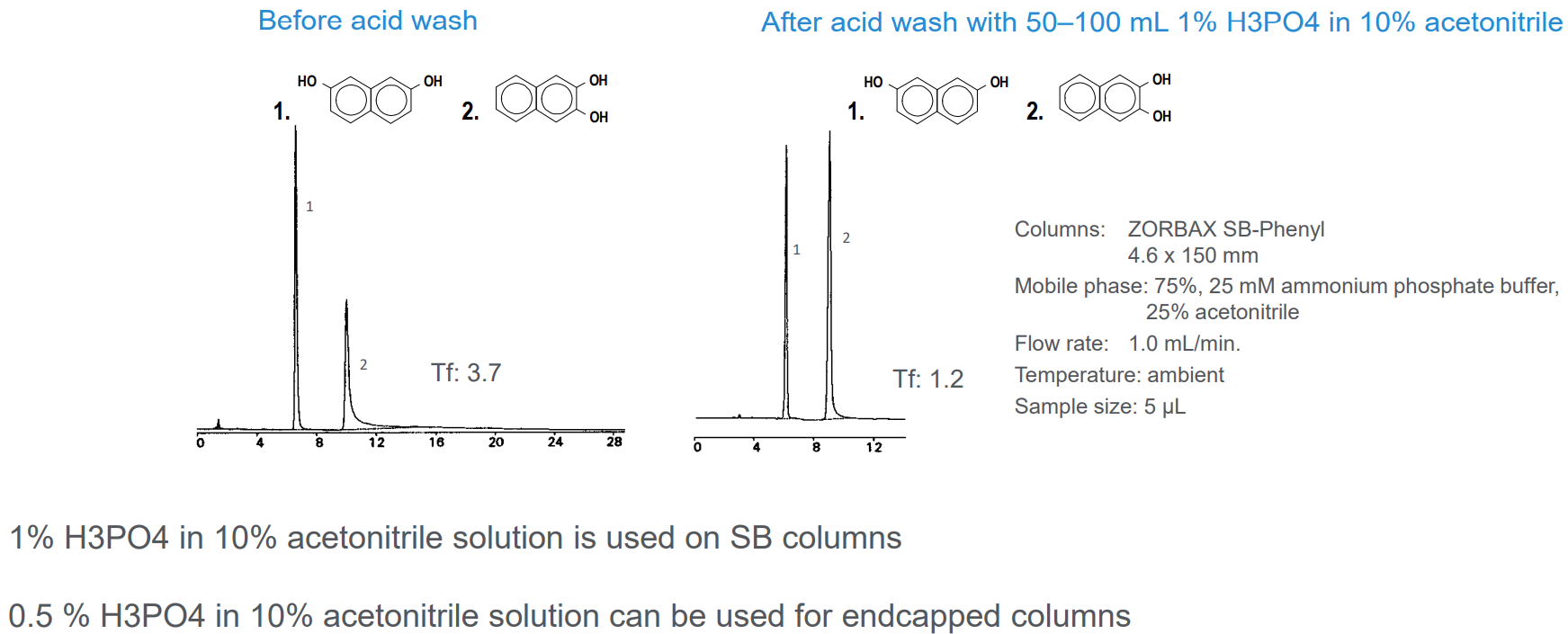
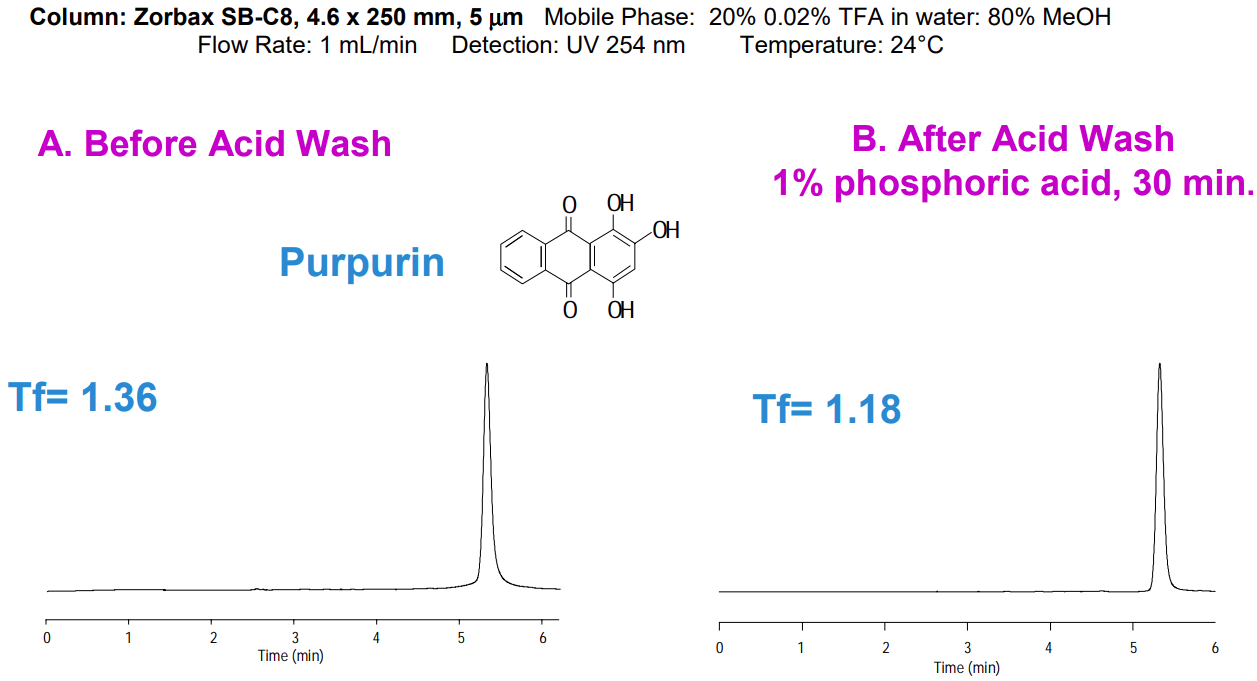
- Analytes that can complex with metals may show poor peak shape.
- Both tailing and fronting may result from metal complexation.
- Metals are present in LC system, column, tubing, fitting ferrules, frits, etc.
- Column packed with high purity silica eliminates silica as a source of metals.
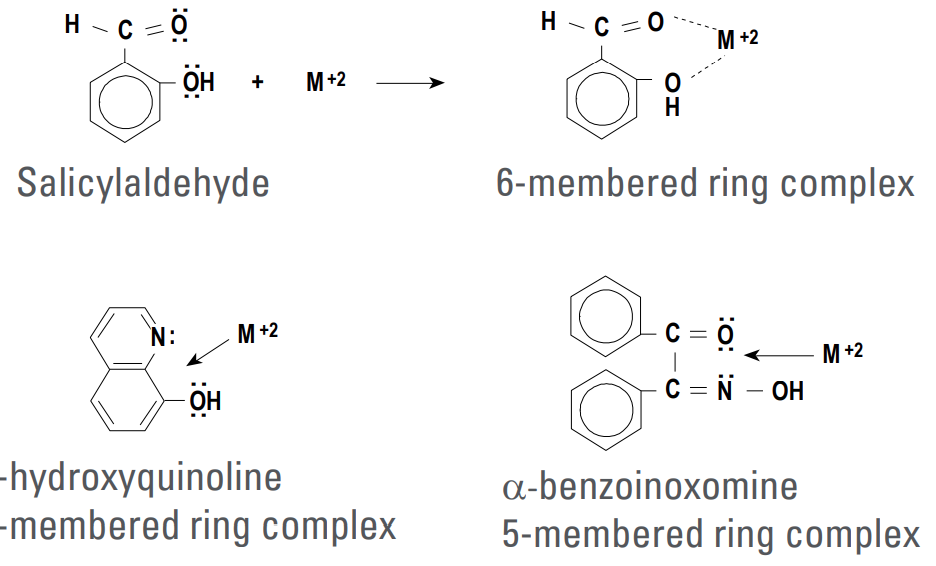
Hint: Look for lone pair of electrons on O2 or N2 which can form 5 or 6-membered ring with metal.
Guidelines for Improved Peak Shape #
- Select columns based on high purity fully hydroxylated silica such as InfinityLab Poroshell line of columns as well as ZORBAX Eclipse Plus, StableBond, Eclipse XDB, Bonus-RP and Extend-C18.
- Select double or triple endcapped columns for mid pH or difficult basic compounds.
- Select special bonded phases (InfinityLab Poroshell 120 HPH, ZORBAX Bonus-RP, ZORBAX Extend-C18) for better peak shape at mid and high pH.
- Select wide-pore columns for high molecular weight analytes.
- Use spring loaded fittings such as InfinityLab Quick Connect and Quick Turn together with appropriate size connecting capillaries.
- Use buffered low pH mobile phases to reduce secondary interactions.
- Use 20 - 50 mM buffered mobile phases at every pH.
- Use mobile phase additives when needed.
- Do sample cleanup.
- Check sample solvent and its strength.
- Use optimized flow rate and data collection rate.
Checklist for Method Development and Better Separation #
-
First gather info of analyte
-
How much is pKa? It will determine the column type to select.(options: encapped. )
For Basic compounds, select:- fully hydroxylated, low acidity column, such as Rx-SIL, ZOBAX StableBond with Rx-SIL.
- Bonus-RP provides unique silanol shielding reducing peak tailing for basic compounds.
- Basic compounds can not ion-exchange with Extend-C18.
- Eclipse XDB at intermediate pH (note: refer to mobile phase pH).
- Poroshell 120 HPH.
For for all sample types – acid, base, neutral, select:
Eclipse XDB
-
How big is the molecule?
It will determine the column pore size.Select wide-pore column for large molecules.
-
-
General guidance
- Use mobile phase additives to reduce silica silanol ionization at mid pH.
- Use mobile pahse additives to reduce hydrogen bonding with silica silanol at low pH.
- Beware of consistence among batches of columns because void in the column will be formed.
Observations: #
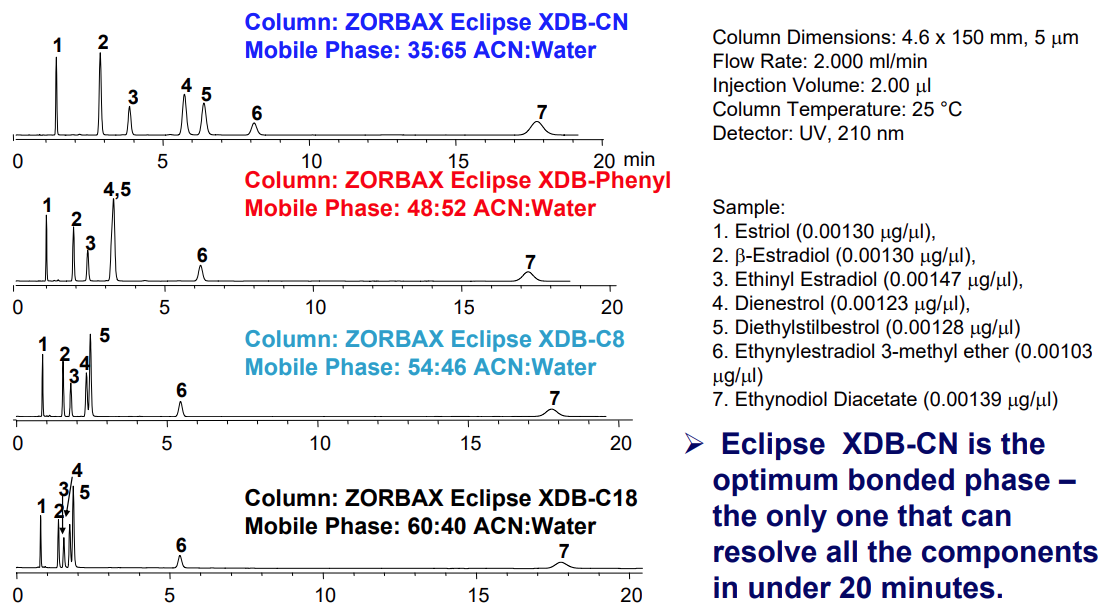
- Basic compounds can be run with low pH and Eclipse XDB column.
- Buffered mobile phases enhance retention, resolution, and peak shape (figure #19, to be #21).
- Change mobile phase B (organic solvent).
Resource #
Choosing Columns and Conditions for the Best Peak Shape